Commercial Land Clearing vs. Residential Land Clearing: Which One Does Your Tennessee Site Really Need?

Choosing the right type of land clearing is one of the first decisions that affects your project’s budget, schedule, safety, and long-term structural integrity. A rural homesite in Dunlap requires a different approach than a commercial development in Jasper or an industrial project near Spencer.

The difference does not simply come down to the size of the building. The total disturbed area, access requirements, drainage plan, soil conditions, environmental constraints, and future use of the property all shape the work.

At Whitzell Excavation, we provide complete land clearing and site preparation for homeowners, contractors, businesses, and industrial developers across Sequatchie County and surrounding Tennessee communities, including Altamont and Tracy City. Our experienced team uses top-tier equipment and proven methods to prepare your property safely, efficiently, and responsibly.

Quick Answer: Which Type Do You Need?

Clear. Safe. Compliant.

Residential land clearing typically prepares a single homesite, driveway, septic area, or outbuilding location. Commercial land clearing supports larger development plans that may include buildings, parking, access roads, utilities, stormwater systems, and multiple construction phases.

However, the project classification depends on more than the property’s intended use. A residential subdivision may require the same level of planning as a commercial site, while a small commercial lot may have a limited clearing footprint.

We evaluate the entire scope before equipment reaches the property. That early assessment gives you a clearer budget and helps prevent costly surprises.

Commercial Land Clearing: Built for Larger Development Plans

Organized. Scalable. Precise.

Commercial land clearing involves more coordination, more infrastructure, and a greater responsibility to protect surrounding properties and natural resources. The work often extends beyond tree and brush removal.

A commercial site may require clearing for:

Building footprints: Removing trees, stumps, roots, rock, and unsuitable soil where foundations will sit.

Parking and access: Preparing entrances, drive lanes, parking areas, loading zones, and fire access routes.

Utility corridors: Creating safe, accurate paths for water, sewer, electrical, gas, and communications infrastructure.

Stormwater systems: Making room for drainage channels, detention areas, culverts, swales, and erosion-control features.

Future phases: Clearing and stabilizing areas that will support later construction or expansion.

Commercial land clearing also requires careful sequencing. Our team may clear selected areas first, install erosion and sediment controls, preserve required buffers, and then continue with grading and excavation. This approach limits exposed soil and keeps the worksite safer for crews, subcontractors, and visitors.

In Tennessee, land-disturbing activity that reaches one acre: or forms part of a larger common plan totaling one acre or more: may require construction stormwater permit coverage through the Tennessee Department of Environment and Conservation. Local requirements can also vary depending on whether the property sits inside municipal limits or in unincorporated Sequatchie County.

Why Commercial Clearing Requires Specialized Equipment

Powerful. Controlled. Efficient.

Large or challenging commercial sites often contain dense timber, steep grades, buried debris, rock, wet areas, and difficult access points. Attempting this work with undersized equipment can extend the schedule and increase safety risks.

Our top-tier excavators, loaders, and hauling equipment allow us to manage multiple phases of the project, including:

Tree and brush removal with controlled placement and processing.

Stump and root extraction to reduce regrowth and prevent future settlement beneath paved or structural areas.

Earthmoving and grading to shape the site for drainage and construction.

Rock and unsuitable soil removal when native material cannot support the planned improvements.

Debris hauling using dump truck hauling services to keep the site orderly and productive.

For contractors, dependable site preparation directly supports the construction schedule. A clean, stable, accessible site gives every following trade a better starting point.

Two excavators and a compact loader working on an active Tennessee earthwork site

Residential Land Clearing: Focused on Your Homesite

Practical. Protective. Personalized.

Residential clearing usually involves a smaller footprint, but precision remains essential. A homesite must accommodate the foundation, driveway, septic system, drainage, utilities, and any planned outbuildings without disturbing more land than necessary.

Our residential land clearing services can include:

Homesite clearing: Removing selected trees, brush, stumps, and debris where your home will be built.

Driveway preparation: Creating a stable access route that fits the property’s slope and drainage needs.

Septic area clearing: Preparing space for the tank and field lines while respecting setbacks and site limitations.

Outbuilding preparation: Clearing and grading areas for sheds, barns, garages, workshops, or additions.

Selective clearing: Preserving desirable trees and natural screening where practical.

Many properties around Dunlap and the Sequatchie Valley include wooded hillsides, uneven terrain, and shallow or variable soils. Sites closer to the Cumberland Plateau may also involve steeper slopes and exposed rock. These conditions influence where your home can sit, how water moves across the property, and how much material the project will require.

Our land clearing services address the complete preparation process rather than simply cutting trees. We remove obstacles, manage debris, shape the ground, and prepare the property for the next construction milestone.

Residential Clearing and Septic Planning

Healthy. Responsible. Long-Term.

A residential lot may look suitable from the road but still present challenges for septic installation, drainage, or foundation construction. Clearing too much: or clearing in the wrong location: can create additional erosion and restoration costs.

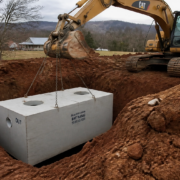
Before clearing a septic area, you should confirm the system layout and soil suitability with the appropriate environmental health authorities. Our team can then coordinate the physical preparation, including access, tank excavation, field line work, and material handling. Learn more about our septic tank installation services.

We also consider how water will move after trees and vegetation are removed. Roots and vegetation help slow runoff. Once they disappear, exposed soil can erode quickly during heavy Tennessee rainfall. Proper grading, temporary stabilization, and drainage planning protect your investment.

Yanmar excavator preparing a cleared and graded residential site in Tennessee

The Most Important Difference: Project Complexity

Scope. Conditions. Consequences.

The best way to distinguish commercial and residential clearing is to review the site’s complexity. Ask these questions before selecting a contractor:

How much ground will be disturbed? Include the building pad, driveway, utilities, parking, septic area, drainage, and future phases: not only the area where trees will be removed.

What is the terrain like? Steep slopes, ravines, rock, wet soils, and uneven grades require different equipment and clearing methods.

Are streams, wetlands, or flood-prone areas nearby? These features may require buffers, additional planning, or permits before land disturbance begins.

How will debris be handled? Chipping, mulching, hauling, or permitted burning each require a practical disposal plan.

What must remain? Mature trees, property-line vegetation, drainage features, and natural buffers may need protection.

What happens after clearing? The site may need grading, compaction, foundation digging, drainage installation, septic work, or retaining wall preparation.

This evaluation matters in every community we serve. A residential lot in Tracy City may demand more technical planning than a flat commercial parcel in Dunlap. A small business site in Altamont may need coordinated drainage and access improvements. Site conditions: not labels alone: determine the right plan.

Grading and Compaction Protect Your Future Structure

Stable. Level. Durable.

Land clearing creates access, but grading creates a buildable surface. Grading means cutting, filling, and shaping soil to establish the correct elevations and direct water away from structures and traffic areas.

Compaction means mechanically tightening soil or aggregate so it can support loads with less movement. Proper compaction helps reduce:

Foundation settlement that can lead to cracks, uneven floors, and structural problems.

Pavement failure caused by weak or shifting subgrade.

Ponding water that damages driveways, yards, foundations, and drainage systems.

Erosion that removes soil from slopes and carries sediment toward neighboring properties or waterways.

Our excavating services include grading, leveling, trenching, backfilling, soil removal, and foundation excavation. We connect the clearing phase to the work that follows so your project does not stop with a pile of brush and an uneven lot.

Environmental Responsibility Starts Before Clearing

Protect. Control. Restore.

Responsible land clearing protects both your property and the surrounding Tennessee landscape. Sequatchie County’s wooded terrain, streams, slopes, and karst features require thoughtful planning, particularly on larger sites.

Our team works to limit unnecessary disturbance and manage materials responsibly. Depending on the site, responsible practices may include:

Preserving natural buffers near streams and drainage paths whenever the project plan allows.

Controlling sediment with appropriate barriers and stabilization methods.

Reducing exposed soil by phasing work and avoiding unnecessary clearing.

Managing debris properly through hauling, chipping, mulching, or other suitable methods.

Protecting neighboring properties from runoff, debris movement, and unsafe access conditions.

If your project involves a waterway, wetland, floodplain, or significant disturbance area, confirm requirements with the relevant local and state authorities before work begins. The Sequatchie County government website can help you identify local contacts and jurisdictional information.

Environmental responsibility and project efficiency work together. Good planning reduces rework, protects the land, and gives you greater peace of mind.

Freshly cleared and graded dirt area bordered by trees in Tennessee

How Whitzell Excavation Supports Your Project

Capable. Communicative. Dependable.

Whether you need residential clearing for a new home or commercial land clearing for a larger development, our full-service capabilities keep the work coordinated from start to finish.

We provide:

Experienced operators who understand local terrain, access challenges, and changing ground conditions.

Top-tier equipment for safe, accurate tree removal, earthmoving, grading, and hauling.

Complete site preparation including clearing, excavation, foundation digging, drainage, septic work, demolition, and retaining wall preparation.

Clear communication so you understand the scope, progress, and next steps.

Safety-focused execution for your family, employees, contractors, neighbors, and property.

Responsible material handling that keeps the site clean and supports environmental compliance.

We proudly serve homeowners, contractors, and businesses searching for dependable land clearing services near me throughout Dunlap, Jasper, Spencer, Altamont, Tracy City, and nearby Tennessee communities.

Choose the Right Clearing Plan for Your Milestone

Confident. Local. Ready.

Residential and commercial land clearing share the same foundation: careful planning, capable equipment, safe execution, and respect for the land. The correct approach depends on your property’s terrain, disturbance area, construction goals, drainage needs, and environmental constraints.

Our team can help you identify the work required before you commit to the next phase. From a single homesite to a large commercial development, Whitzell Excavation delivers the precision and coordination your investment deserves.

When you need experienced site preparation contractors in Sequatchie County and surrounding Tennessee communities, contact Whitzell Excavation at 423-443-1112. We will help you create a safe, stable, build-ready site with the peace of mind that comes from professional preparation.
How to Build a Gravel Driveway That Lasts on Tennessee Clay Soil (Step-by-Step Guide)

If you live in Sequatchie County, Dunlap, Jasper, or the surrounding communities along the Cumberland Plateau, you are likely all too familiar with the trials of Tennessee clay soil. When heavy spring rains hit our region, traditional gravel driveways often seem to vanish overnight. Rock sinks into the mud, deep ruts form after a single delivery truck passes, and standing water turns your approach into an impassable swamp. At Whitzell Excavation, our team knows that a reliable driveway is not just about dumping stone on dirt: it is an engineering project rooted in local geology.

When you want an approach that withstands heavy seasonal rainfall and years of daily wear, partnering with experienced driveway excavation contractors makes all the difference. In this comprehensive guide, we walk you through our proven, phase-based approach to building a gravel driveway on stubborn Tennessee clay soil that will stand the test of time.

Phase One: Site Evaluation and Layout Planning

Solid. Precise. Planned.

Before a single bucket of dirt is moved, your driveway project requires careful planning and layout precision. Soil conditions across Dunlap and Sequatchie County vary significantly, but heavy, moisture-retentive clay is a constant challenge. Our team evaluates your property's topography, natural water flow, and load requirements to design an approach tailored to your land.

Route optimization ensures your driveway avoids natural depressions and low-lying wet zones where water naturally pools.
Utility location guarantees that public and private lines are safely marked before any excavation equipment touches your soil.
Width specifications are established early, typically planning for a standard 10-to-12-foot residential width with wider turnarounds if necessary.

When you invest in professional planning, you eliminate costly guesswork and ensure your driveway aligns perfectly with your property layout and future milestones.

Phase Two: Stripping Topsoil and Subgrade Preparation

Deep. Clean. Excavated.

The primary reason DIY gravel driveways fail in Tennessee is improper subgrade preparation. Topsoil and organic matter are spongy and retain moisture; if you dump gravel directly onto unstripped topsoil, the entire structure will shift and sink.

Standing water and mud on an unexcavated construction site illustrating the necessity of proper subgrade removal

Our team uses heavy machinery to strip away topsoil, roots, and organic debris down to firm, stable mineral clay. For more insights on why professional earthwork is essential, explore our guide on professional residential excavation contractors.

Topsoil removal strips away soft organic material that prevents proper structural compaction.
Subgrade grading establishes a solid clay foundation shaped with a distinct crown to shed water.
Mechanical compaction uses heavy rollers or plate compactors to press the clay subgrade to maximum density, eliminating air pockets.

By establishing a rigid, compacted clay subgrade, we create a secure foundation that prevents your driveway from sinking under heavy vehicle loads.

Phase Three: Installing Geotextile Fabric and Base Aggregate

Layered. Stable. Reinforced.

Clay soil has a frustrating habit of "pumping": pushing upward into gravel layers when wet while the gravel sinks downward under weight. To stop this migration, professional excavation requires a high-strength separation layer.

Precision grading on a cleared construction site ready for base aggregate installation

Once your subgrade is compacted, we install industrial-grade geotextile fabric across the entire footprint before laying any stone. Learn more about our comprehensive site prep techniques on our site prep services page.

Geotextile separation prevents clay and stone from mixing, preserving the structural integrity of your base.
Crusher run foundation provides 4 to 6 inches of dense-graded crushed stone and stone dust that locks tightly together when compacted.
Multi-lift compaction ensures each layer of base stone is thoroughly compressed in stages for maximum load-bearing strength.

This robust foundation layer distributes the weight of cars, delivery trucks, and farm equipment evenly across the clay, ensuring permanent structural stability.

Phase Four: Drainage Solutions and Surface Grading

Sloped. Protected. Draining.

Water is the ultimate enemy of any gravel driveway, especially on impermeable Tennessee clay. Without dedicated drainage features, even the best-built base will eventually wash out or saturate.

Cleared construction site showing active earthwork and proper grading equipment

Our team integrates precise drainage engineering into every driveway project we undertake. For further reading on managing water runoff and site grading, check out our expert advice on proper grading and drainage solutions.

Crown shaping ensures the center of your driveway sits higher than the edges, forcing rainwater to shed sideways immediately.
Side ditches and swales capture runoff from the crown and guide it safely away from your driveway bed.
Culvert installation prevents erosion by managing cross-flows where driveways intersect natural drainage paths or creeks.

With professional drainage in place, you gain total peace of mind knowing your investment is safeguarded against heavy seasonal downpours.

Phase Five: The Wearing Course and Final Polish

Angular. Durable. Finished.

The final step in building a lasting gravel driveway is installing the top wearing course. Unlike rounded river rock: which acts like ball bearings and rolls away under tires: we use angular crushed stone that interlocks securely.

Crushed angular stone (typically ¾-inch to 1-inch aggregate) provides superior tire traction and resists displacement.
Even distribution spreads the wearing course smoothly across the compacted crusher run base at a depth of 2 to 3 inches.
Light rolling settles the surface stones just enough to lock them in place while preserving a natural, durable texture.

Your new driveway is now ready to handle daily traffic with elegance, durability, and minimal maintenance. Browse our latest updates and projects over on our Whitzell Excavation blog.

Why Partner with Whitzell Excavation?

Experienced. Local. Trusted.

Building a gravel driveway that actually lasts on Tennessee clay requires specialized equipment, regional geological knowledge, and precise technical execution. Doing it yourself or hiring inexperienced operators often leads to repeating the exact same expensive mistakes every few years.

When you work with our licensed and insured team at Whitzell Excavation, you are partnering with local experts who understand the unique soil mechanics of Sequatchie County and the surrounding Cumberland Plateau. We take pride in delivering on-time project completion, transparent communication, and exceptional craftsmanship for every homeowner and builder.

Contact our team today to schedule your consultation and build a rock-solid foundation for your property's success.

Do You Really Need a Septic Tank Inspection? The Truth About Tennessee’s New 2026 Rules

Navigating the complexities of property ownership in Tennessee has always required a keen eye for detail, but 2026 has introduced a new layer of technical demand. As the Tennessee Department of Environment and Conservation (TDEC) continues to refine its oversight of Subsurface Sewage Disposal Systems (SSDS), homeowners and developers across Sequatchie County and the surrounding valleys are facing a critical question: is a septic tank inspection truly mandatory, or is it a relic of over-caution?

The reality of the 2026 regulatory environment is that "good enough" no longer meets the legal or structural thresholds required for modern builds. Whether you are breaking ground in Dunlap or managing a commercial expansion in Jasper, the shift toward tighter environmental protection and more rigorous soil evaluation means your septic system is under more scrutiny than ever before. At Whitzell Excavation, we have tracked these changes closely, ensuring that our clients’ investments are protected by systems that are not just compliant, but engineered for decades of service.

Phase One: Navigating the 2026 TDEC Regulatory Landscape

Strict. Transparent. Compliant.

The foundation of Tennessee’s updated approach lies within TDEC Chapter 0400-48-01. This isn't just a manual of suggestions; it is the legal framework that dictates how every gallon of wastewater is managed on your property. In 2026, the emphasis has shifted from simple "perc tests" to comprehensive site evaluations that consider geological stability and groundwater protection.

Our team has observed a significant increase in the enforcement of multi-compartment tank requirements. The 2026 standards prioritize primary treatment within the tank, demanding structures that can effectively separate solids before effluent ever reaches your field lines.

Soil Integrity Assessments: Before a single shovel of dirt is moved, your site must undergo a rigorous soil evaluation by a licensed professional. This ensures that the ground in Spencer or Altamont can actually handle the hydraulic load of your intended structure.
Two-Compartment Mandates: Modern regulations favor tanks that utilize at least two compartments, where the first section handles two-thirds of the total capacity. This design is crucial for preventing "sludge breakout" into your secondary field.
Setback Precision: New rules have sharpened the focus on distances from property lines, wells, and water bodies. Even a six-inch deviation can lead to a failed inspection and costly re-excavation.
Permit-First Protocols: TDEC now explicitly requires a septic construction permit before any building pad construction or major dirt work begins. Skipping this step in Sequatchie County can result in immediate stop-work orders.

Understanding these rules is the first step toward securing your property's future. We prioritize site preparation that aligns perfectly with these evolving state requirements.

An active construction site with a CAT excavator performing precision earthwork and land clearing.

Phase Two: Why Inspections are No Longer Optional

Vital. Protective. Built to Last.

For many years, inspections were viewed as a formality for new builds. In 2026, the "truth" is that inspections serve as your primary defense against catastrophic system failure. The geology of the Sequatchie Valley: characterized by varying layers of clay and limestone: presents unique challenges for drainage. An uninspected system is a liability that can lead to environmental contamination and massive repair bills.

When we perform septic tank installation and field line work, we view the inspection as a milestone of success. It provides you with the documented proof that your investment is structurally sound and environmentally responsible.

Environmental Stewardship: A failing septic system doesn't just stay on your property; it can leach into local groundwater. Inspections verify that your system is functioning as a mini-treatment plant, protecting the Tennessee landscape we all call home.
Real Estate Security: If you plan to sell your property in Dunlap or Tracy City, a certified inspection report is often a non-negotiable requirement for buyers and lenders. A system without a paper trail is a major hurdle during closing.
Preventative Maintenance: An inspection often catches minor issues: like a slightly misaligned distribution box or a cracked riser lid: before they escalate into a total field line failure.
Compaction Verification: One of the most common causes of system failure is improper soil compaction around the tank and lines. Professional inspectors look for "settling" issues that could lead to pipe shear or tank shifting.

Ignoring the health of your septic system is a risk that modern property owners simply cannot afford. By adhering to Tennessee's latest soil and drainage rules, you ensure that your home remains a safe, functional sanctuary.

A detailed view of freshly installed septic drainfield lines and gravel bedding in a precisely engineered trench.

Phase Three: Engineering Your Field Lines for Longevity

Precise. Durable. High Performance.

The septic tank is only half of the equation; the "field lines" (or soil absorption area) are where the heavy lifting happens. In 2026, TDEC has increased its focus on "loading rates": a technical term for how much effluent the soil can actually absorb per square foot. In the rocky or clay-heavy soils of the Cumberland Plateau, this requires expert excavation and precision grading.

Our team at Whitzell Excavation doesn't just dig trenches; we engineer disposal fields. We understand that the longevity of your system depends on the interface between the gravel, the pipe, and the native soil.

Custom Trench Design: We utilize top-tier equipment to ensure every trench is cut to the exact depth and width specified by your permit. Precision here prevents "localized overloading," where one part of the field becomes saturated and fails.
Advanced Drainage Solutions: In areas with high water tables, we often integrate custom drainage solutions to divert surface runoff away from your absorption field. This prevents the "swamp effect" during heavy Tennessee rains.
High-Quality Materials: From the grade of the gravel to the durability of the chambers or perforated pipe, we never compromise on the components that sit underground.
Grading and Finishing: Once the lines are in place, the final grading is critical. We ensure the site is contoured to shed water naturally, protecting the integrity of the soil above your field lines.

When you see standing water or mud on a construction site, it is often a sign of poor planning or failed field lines. We eliminate these risks through calculated, professional execution.

Standing water and mud on a poorly drained construction site, highlighting the necessity for professional drainage and septic planning.

Phase Four: The Whitzell Advantage in Site Preparation

Expert. Local. Reliable.

Choosing an excavation partner for your septic needs in 2026 requires more than just a man with a backhoe. It requires a licensed and insured professional who understands the local geography of Sequatchie, Marion, and Grundy Counties. We take pride in being a full-service partner, handling everything from land clearing and debris removal to the final setting of your septic tank.

Our collective expertise ensures that your project moves from "Phase One" to completion without the delays often caused by regulatory misunderstandings or equipment failure.

Local Knowledge: We know the difference between digging in the valley and working on the mountain. This specialized knowledge prevents "surprises" that can derail a project budget.
Modern Fleet: Our use of CAT and Yanmar equipment allows for precision work in tight residential spots and large-scale industrial sites alike.
Transparent Communication: We keep you informed at every milestone. You will never have to guess about the status of your TDEC inspection or the progress of your installation.
Structural Integrity: Our focus is always on the long-term success of your build. We don't just "fill the hole"; we ensure the ground is stable, the drainage is correct, and the system is built to last.

For homeowners in Dunlap and surrounding areas, knowing what to look for in an excavation service is the best way to ensure peace of mind during a complex build.

A red Yanmar excavator on a freshly graded and cleared site, demonstrating the clean results of professional site preparation.

Securing Your Milestone with Professional Precision

The truth about Tennessee’s 2026 septic rules is that they are designed to protect you, your property, and our shared environment. While the requirements for inspections and two-compartment tanks may seem daunting, they are essential components of a modern, high-performing home.

At Whitzell Excavation, we provide the technical expertise and local reliability needed to navigate these regulations with confidence. Your success is our mission, and we are committed to delivering results that stand the test of time. Don't leave your property's structural integrity to chance: partner with a team that treats your investment with the seriousness it deserves.

Whether you are in the early stages of site preparation or need a professional team to manage your field line work, we are here to ensure your project is efficient, compliant, and built to last.

7 Mistakes You’re Making with Demolition Planning (and How to Fix Them)

Demolition is often perceived as the "easy" part of a construction project: a simple matter of brute force and heavy machinery. However, within the industry, we know that demolition is a surgical operation that requires meticulous foresight. In the unique geological landscape of Sequatchie County, from the rocky bluffs of Altamont to the valley floors of Dunlap, a poorly planned demolition can quickly escalate into a financial and structural nightmare.

When you embark on a demolition project, you aren't just clearing a site; you are protecting your investment and ensuring the longevity of whatever will be built in its place. Our team at Whitzell Excavation has seen how minor oversights in the planning phase can lead to significant delays and safety hazards. To help you maintain the structural integrity of your property and achieve peace of mind, we have outlined the seven most critical mistakes made in demolition planning and, more importantly, how our professionals solve them.

Phase One: Strategic Pre-Demolition

Skipping Local Permitting and Compliance

Legal. Precise. Secure.

The first mistake many property owners make is assuming that because they own the land, they have the immediate right to tear down a structure. In Tennessee, and specifically within the local jurisdictions of Dunlap or Jasper, failure to secure the proper demolition permits can lead to immediate stop-work orders and heavy fines.

Verify Local Ordinances: Before a single bucket hits a wall, our team confirms all regional zoning laws and setback requirements. This ensures your project remains in good standing with local authorities.
Environmental Clearances: Many older structures in our region may require specific environmental clearances before demolition can begin. We handle the paperwork to ensure your project is compliant from day one.
Neighbor Notification: Being a good neighbor is part of being a professional. We recommend and facilitate notifications to surrounding properties to manage expectations regarding noise and dust.

Securing your permits early is the only way to guarantee that your project milestones are met without legal interference.

Failing to Locate and Disconnect Utilities

Calculated. Controlled. Safe.

A construction site safety zone with utility markings and a worker in high-visibility gear

One of the most dangerous mistakes in demolition is the failure to properly identify and de-energize utilities. Striking a live gas line or an underground electrical conduit isn't just a delay: it’s a life-threatening hazard.

Professional Utility Location: We don’t guess where the lines are. Our team coordinates with local utility providers to mark and verify all service lines, including water, gas, electricity, and septic systems.
Septic System Protection: In rural areas like Spencer or Tracy City, many properties rely on septic tanks and field lines. We ensure these are mapped so they aren't crushed by heavy equipment. You can learn more about our specialized septic prep services here.
Safe Disconnection: We ensure all services are physically disconnected and capped at the appropriate boundary before mechanical demolition commences.

Taking the time to de-energize the site provides the safety and certainty required for a smooth operation.

Phase Two: Tactical Execution and Site Control

Ignoring Hazardous Material Assessments

Safety. Integrity. Compliance.

Many older residential and commercial buildings in Sequatchie County contain legacy materials like asbestos or lead-based paint. Simply "smashing" these structures releases toxic particles into the air, endangering your family, our crew, and the local environment.

Pre-Demo Inspection: We advocate for a thorough inspection of the structure's components before any work begins. Identifying these materials early allows for proper abatement strategies.
Containment Protocols: If hazardous materials are found, we follow strict containment and disposal protocols to prevent site contamination.
Environmental Responsibility: We prioritize the health of our community, ensuring that all hazardous waste is hauled to licensed facilities.

Your safety is our priority, and identifying risks before they become problems is how we protect your long-term success.

Poor Debris Management and Logistics

Organized. Reliable. Thorough.

A black dump truck delivering fill dirt at a forested site, showcasing logistics and material management

Demolition generates an immense volume of material. A common mistake is underestimating how that material will be moved and where it will go. Without a logistics plan, your site will quickly become a cluttered, unsafe environment.

Staging for Efficiency: We plan specific "zones" for different types of debris: wood, masonry, and metal: to streamline the hauling process.
Dump Truck Coordination: Our fleet of dump trucks is scheduled to ensure a continuous flow of material away from the site, preventing bottlenecks.
Recycling Opportunities: We look for ways to salvage materials, such as clean concrete or metal, which can reduce your overall disposal costs.

Efficient debris removal is essential for maintaining a clean, professional workspace that allows the next phase of construction to begin on time.

Neglecting Erosion and Drainage Control

Strategic. Protective. Professional.

Excavator clearing land and managing soil, highlighting erosion control and site preparation

When you remove a structure and the surrounding vegetation, you change how water moves across the land. In the hilly terrain of the Tennessee plateau, this often leads to rapid erosion and water damage to adjacent properties.

Silt Fencing and Barriers: We install erosion control measures like silt fences to keep sediment from washing away during the demolition process.
Custom Drainage Solutions: If the demolition leaves a void, such as a basement, we implement temporary drainage to prevent water from pooling and destabilizing the soil. You can see our approach to land clearing and site prep here.
Soil Compaction: Once the structure is removed, we ensure the remaining soil is properly graded and compacted to prevent future settling issues.

Protecting the land during demolition is the first step in building a foundation that will last for generations.

Phase Three: Logistics and Final Stabilization

Underestimating Structural Complexity

Expert. Seasoned. Technical.

Not all structures are built the same. A mistake often made by less experienced contractors is failing to understand the load-bearing sequence of a building. Removing the wrong wall at the wrong time can result in an uncontrolled collapse.

Sequential Demolition: Our team follows a top-down, phased approach. We remove roofs and upper stories before moving to the ground level, ensuring the structure remains stable throughout the process.
Equipment Selection: We use the right tool for the job: whether it’s a high-reach excavator for tall structures or a compact unit for tight residential lots.
Precision Execution: By understanding the "bones" of the building, we can perform selective demolition that leaves neighboring structures or desired sections untouched.

Controlled demolition requires a deep understanding of engineering principles, which our team brings to every project site.

Hiring Based on the Lowest Bid

Quality. Longevity. Trusted.

A red compact excavator grading a steep hillside, demonstrating the expertise required for challenging terrain

The biggest mistake you can make is choosing a demolition contractor based solely on the lowest price. Demolition is a high-risk activity; "cheap" often means the contractor is cutting corners on insurance, safety equipment, or proper disposal.

Fully Licensed and Insured: Whitzell Excavation is a fully licensed and insured entity. This provides you with total protection against liability in the event of an accident.
Investment in Technology: We use top-tier equipment to ensure safety and precision, which ultimately saves you money by preventing costly mistakes.
Expert Local Guidance: As a local business, we know the soil, the regulations, and the challenges of building in our region. Our reputation is built on the success of your project.

When you invest in professional excavation and demolition, you are investing in the structural integrity of your future home or business. Don't settle for less than the expertise your project deserves.

Conclusion: Partnering for Your Success

Demolition is the foundation of transformation. By avoiding these common mistakes, you ensure that your site is prepared for the next chapter without the burden of hidden costs or safety risks. Our team at Whitzell Excavation is committed to providing the precision, safety, and communication you need for a successful project.

Whether you are clearing a residential lot in Dunlap or preparing a large-scale commercial site in Sequatchie County, we are here to guide you through every phase of the process. Let us handle the complexities of demolition so you can enjoy the peace of mind that comes with professional execution.
Ready to start your next project with a team you can trust? Contact Whitzell Excavation today for a consultation and let's build something great together.

Why Tennessee’s New Soil Rules Will Change the Way You Build with Residential Excavation Contractors

Building a home in Tennessee has always required a deep understanding of the land. Whether you are breaking ground in the rocky terrain of Jasper or the rolling hills of Spencer, the dirt beneath your feet dictates the success of your structure. Recently, the landscape of residential construction changed significantly with the implementation of new soil regulations that took effect in February 2026.

These rules, established by the Tennessee Department of Environment and Conservation (TDEC), have fundamentally altered how we manage soil during the excavation phase. For homeowners and contractors alike, these updates are not just bureaucratic hurdles; they represent a major shift in how we approach site preparation and land management. At Whitzell Excavation, we have adapted our processes to ensure every project remains compliant while maximizing the cost-saving opportunities these new rules provide.

Understanding these changes is essential for anyone looking to build a stable, long-lasting home in our region. From Dunlap to Pikeville, the way we handle "dirt" at Whitzell Excavation is no longer just about moving it from point A to point B. It is about professional categorization, environmental responsibility, and structural integrity.

Understanding the February 2026 Soil Regulation Update

For decades, excess soil from construction sites was often treated as waste. If there was even a hint of contamination or if the soil didn't meet specific aesthetic standards, it was hauled off to a landfill. This process was expensive, time-consuming, and environmentally taxing. The new rules introduced a more logical, streamlined approach to soil management.

These regulations focus on the "reuse" of soil. Instead of automatically labeling excavated material as solid waste, the state now provides clear pathways for testing and relocating soil to other sites. This shift is designed to encourage sustainability while lowering the overall cost of large-scale residential projects. For our team at Whitzell Excavation, this means more time spent on precision planning and less time dealing with landfill logistics.

Yellow excavator performing precision site grading for a new home build in the Sequatchie Valley.

The Shift from Disposal to Management

Compliant. Efficient. Resourceful.

The primary goal of the new rules is to create clarity. Before these updates, many developers in the Sequatchie Valley faced uncertainty regarding whether their excavated soil could be used as fill elsewhere. This uncertainty often led to "playing it safe" by paying high fees to dispose of perfectly usable material.

Now, the state has provided a framework that treats soil as a valuable resource. At Whitzell Excavation, we work closely with our clients to evaluate the soil on-site early in the process. By determining the soil's quality and history through professional environmental assessments, we can often keep material on-site or move it to a secondary location where it is needed for grading or slope correction.

Category 1 vs. Category 2 Soil

Precise Categorization. Reduced Waste.

The new regulations divide soil into two distinct categories based on its composition and history. Understanding which category your soil falls into is the first step in any modern excavation project.

Category 1 Soil consists of material where contamination levels are below established background levels. This soil is essentially "clean" and can be moved off-site to almost any other location without extensive TDEC oversight. This is a game-changer for site preparation in Pikeville and Whitwell, as it allows us to share resources between local builds.

Category 2 Soil refers to material that may have some levels of contamination but is still safe for specific types of reuse. This soil can often be moved to other construction sites, public road projects, or industrial areas, provided it is managed under a TDEC-approved plan. We handle the logistics of these approvals so that your project stays on schedule.

How These Rules Impact Your Construction Costs

One of the most common questions we hear from homeowners in Marion County and Grundy County is how these rules affect the bottom line. While new regulations often sound like they will add cost, these specific updates are designed to do the opposite for those who work with expert contractors.

By reducing the reliance on landfills, Whitzell Excavation can significantly lower the overhead of a residential build. Excavation is the foundation of your entire investment, and managing the soil correctly is the most effective way to protect that investment.

Reducing Landfill Fees and Hauling Costs

Cost-Effective. Localized. Smart.

In the past, hauling "waste" soil to a landfill was a major expense. You weren't just paying for the fuel and the labor; you were paying the landfill's tipping fees, which have risen steadily over the years. Under the new rules, if your soil qualifies for reuse, those fees disappear.

Localized soil relocation allows us to keep materials within the community. Instead of driving miles to a waste facility, we can often find a nearby project in Spencer or Tracy City that needs fill dirt for proper grading.

Purchasing fill material becomes less frequent when we can effectively reuse what is already on your land. By balancing the "cut and fill" on a property, we minimize the need to bring in outside dirt, which ensures the soil's consistency and saves you money.

Excavator loading rich soil into a dump truck for reuse at a Tennessee residential building site.

Speeding Up the Site Prep Timeline

Streamlined. Faster. Professional.

Time is money in construction. The new rules provide a faster track for soil evaluation through the Voluntary Cleanup Oversight and Assistance Program (VOAP). By enrolling projects in this program, we get quicker answers from the state regarding soil safety and relocation.

We understand that you want to move from foundation digging to framing as quickly as possible. Our expertise at Whitzell Excavation in navigating these new regulatory pathways means fewer delays at the start of your build. We ensure that all sampling and documentation are handled correctly the first time, preventing the "stop-work" orders that often plague less experienced teams.

Why You Need an Expert Team for Compliance

Navigating Tennessee's new soil rules isn't something a homeowner should do alone. It requires a deep understanding of environmental standards, soil science, and local geology. As residential excavation contractors at Whitzell Excavation, our role has expanded from just operating heavy machinery to serving as consultants on land health and regulatory compliance.

Whether you are working on a septic prep project in Dunlap or a complex residential development in Jasper, the stakes are higher than ever.

Navigating the VOAP and TDEC Standards

Expert Oversight. Legal Assurance.

The Voluntary Cleanup Oversight and Assistance Program (VOAP) is now a central part of the excavation process for many Tennessee builds. This program allows for a streamlined review of soil management plans. However, the application process is technical, which is why Whitzell Excavation approaches it with a detail-oriented process.

Documenting site history is now a standard part of our pre-excavation checklist. We look at previous land use in areas like South Pittsburg and Powells Crossroads to anticipate any potential soil issues before we even start the engines.

Developing soil-use plans is a requirement for moving Category 2 soils. We create these plans with precision, detailing exactly where the soil is going, how it will be covered, and how it will be compacted to ensure long-term stability.

Professional soil sampling and core analysis for residential excavation and foundation stability.

Professional Soil Sampling and Analysis

Technical Precision. Guaranteed Results.

You cannot manage what you haven't measured. The new rules rely heavily on "professional judgment" and actual site data. At Whitzell Excavation, we utilize modern sampling techniques to get a clear picture of what is in your dirt. This data is vital for ensuring the longevity of your build.

Testing for compaction ensures that reused soil provides a stable base for your foundation. Soil that isn't properly analyzed can lead to settling issues, cracks in your slab, or poor drainage later on.

Identifying drainage risks is a key part of our soil analysis. In Tennessee, managing water is just as important as managing dirt. Our team uses this soil data to prevent common yard drainage mistakes before they happen.

Building for the Future in the Sequatchie Valley

Our service area, including Bledsoe, Grundy, and Marion Counties, features some of the most beautiful but challenging terrain in the state. From the heights of Monteagle to the valley floors of Whitwell and Dunlap, every site requires a unique approach. These new soil rules give Whitzell Excavation better tools to build houses that last while respecting the local environment.

Tailored Excavation for Local Landscapes

Rugged. Reliable. Regionally Focused.

We don't believe in a one-size-fits-all approach to excavation. The soil in Lusk or Hendon is different from the soil in Middle Valley. Our local experience at Whitzell Excavation allows us to apply these new state rules in a way that makes sense for our specific geography.

Slope correction and grading are often the biggest challenges in our region. By utilizing the new soil reuse rules, we can more effectively move earth to create flat, buildable pads on hilly terrain without the massive cost of hauling in external fill.

Site preparation for rural builds often involves navigating complex health department standards for septic systems. We ensure that our soil management plans align with all local and state requirements, providing a seamless experience for the homeowner.

Your Trusted Expert in Modern Excavation

At Whitzell Excavation, we pride ourselves on being more than just guys with backhoes. We are professionals who stay ahead of the curve so that our clients don't have to. The transition to Tennessee’s 2026 soil rules has been a major change for the industry, but we have embraced it as an opportunity to provide better service and more value.

Our team at Whitzell Excavation possesses the technical expertise, heavy equipment, and regulatory knowledge to handle any residential project, regardless of size or complexity. We understand that the foundation of your home starts long before the concrete is poured: it starts with the very first scoop of dirt. By following the new state guidelines, we ensure that your project is built on a foundation of compliance, safety, and structural integrity.

Whether you are a homeowner planning your dream house or a fellow contractor looking for a reliable partner in Sequatchie County, Whitzell Excavation is here to help. We focus on the longevity of our work, ensuring that every site we prepare is built to stand the test of time. In an era of changing regulations, you need a partner who knows the ground as well as the rules. We are that partner.

10 Reasons Your Yard Drainage Isn’t Working (And How to Fix It)

Maintaining a beautiful home in the Dunlap area comes with its fair share of challenges, and drainage is often at the top of the list. Between our heavy seasonal rains and the notorious local red clay, keeping your yard dry can feel like a full-time job. When water starts pooling near your foundation or turning your lawn into a swamp, it is more than just an eyesore. It is a threat to your property’s structural integrity.

At Whitzell Excavation, we see these issues every day from Jasper to Spencer and down into Dunlap. If you have noticed that your yard stays soggy long after the clouds have cleared, there is likely a mechanical or structural reason for the failure. Understanding why your current system is failing is the first step toward a permanent solution.

1. Poor Yard Grading and Surface Slope

The most fundamental reason for drainage failure is improper grading. If the ground around your home does not slope away from the foundation, gravity will naturally pull water toward your basement or crawlspace. Many older homes in Dayton and Altamont have experienced soil settling over decades, which can reverse the original slope of the yard.

When we perform a site assessment, we often find “negative grading” where the yard has become a bowl. This collects runoff from the entire neighborhood rather than shedding it toward the street or a designated drainage easement.

The Professional Fix

We use precision laser levels to determine the exact pitch of your land. Our team then regrades the area to ensure a minimum of a six-inch drop over the first ten feet away from your foundation. This redirected flow prevents water from sitting against your home.

Precise. Permanent. Property-Saving.

2. The Tennessee Clay Factor

Dunlap and the surrounding Sequatchie Valley are famous for heavy clay soil. Clay is comprised of very fine particles that pack together tightly, leaving almost no room for water to permeate. Unlike sandy soil, which allows water to soak through quickly, clay acts like a sponge that holds moisture or a brick that rejects it entirely.

When clay becomes saturated, it expands. This expansion creates hydrostatic pressure against foundation walls. Once the soil can no longer hold water, the excess simply sits on the surface, creating those stubborn puddles that ruin your grass.

The Professional Fix

Whitzell Excavation solves clay issues through soil amendment or by bypassing the clay layer entirely. We often install specialized drainage systems that move water through gravel-filled trenches, giving the runoff a path of least resistance that doesn’t rely on the soil’s natural permeability.

Technical. Proven. Reliable.

Saturated Tennessee red clay soil causing poor yard drainage and standing water puddles.

3. Impacted or Over-Compacted Soil

Compaction often occurs during construction or major landscaping projects. Heavy equipment moving across a yard in South Pittsburg or Pikeville can crush the air pockets in the soil. Even if your soil isn’t pure clay, high levels of compaction prevent water from soaking into the ground.

This is especially common in new developments where heavy machinery was used to clear lots. The result is a lawn that looks fine but behaves like concrete during a rainstorm.

The Professional Fix

Our team utilizes professional-grade excavation equipment to break up compacted layers. In severe cases, we may recommend a more robust drainage installation Dunlap TN residents can rely on, such as a dry well or a comprehensive French drain system to handle the runoff that the soil can no longer absorb.

Heavy-Duty. Effective. Grounded.

4. Faulty Downspout Installation

Your roof is a massive water collector. During a heavy Tennessee downpour, hundreds of gallons of water flow through your gutters. If your downspouts drop that water right at the base of your house, you are essentially flooding your own foundation.

Many standard downspout extensions are too short or become disconnected over time. If they aren’t integrated into an underground system, the water simply recirculates back toward your crawlspace or basement.

The Professional Fix

We recommend and install buried downspout extensions. By connecting your gutters to solid PVC piping that runs far away from the house, we ensure that roof runoff is never a factor in your yard’s drainage health. This is a critical component of any drainage installation Dunlap TN homeowners should consider.

Integrated. Seamless. Dry.

5. Use of Inferior Drainage Materials

Many DIY projects and low-cost contractors use thin, black corrugated plastic piping for yard drains. While cheap and easy to find, these pipes are prone to several failures. They are easily crushed by lawnmowers or shifting soil, they accumulate sediment in their ridges, and they are a favorite home for nesting rodents.

Once a corrugated pipe kinks or clogs, the entire drainage system is effectively dead. Because the interior is not smooth, water moves slowly, allowing debris to settle and create permanent blockages.

The Professional Fix

Whitzell Excavation strictly uses high-quality, rigid PVC for our drainage solutions. Smooth-wall pipe allows water to flow at maximum velocity and is much easier to clean if a blockage ever occurs. It withstands the pressure of the soil and the weight of vehicles, ensuring your investment lasts for decades.

Durable. High-Flow. Professional-Grade.

Comparing failed corrugated pipe to rigid PVC for drainage installation in Chattanooga TN.

6. Lack of Proper Pipe Pitch

Water does not move uphill without a pump. One of the most common mistakes we find in failing systems in areas like Dunlap and Whitwell is a lack of “pitch” or slope in the underground pipes. If a pipe is installed flat or has “bellies” (low spots), water will sit in the pipe.

Standing water in a pipe leads to sediment buildup and becomes a breeding ground for mosquitoes. Eventually, the pipe fills with silt and stops functioning entirely.

The Professional Fix

We utilize transit levels and grade stakes to ensure a consistent downward slope for every foot of pipe we lay. We verify the “fall” of the system before backfilling any trenches, ensuring that once the water enters the pipe, it has the momentum to reach the exit point.

Calculated. Accurate. Flow-Focused.

7. Improperly Installed French Drains

A French drain is a classic solution, but it is often installed incorrectly. Common mistakes include using the wrong type of gravel, failing to use a filter fabric (geotextile), or using perforated pipe with the holes facing upward.

Without filter fabric, the surrounding soil will eventually wash into the gravel and the pipe, “blinding” the drain and making it useless. If the holes in the pipe face up, the water level has to rise significantly before it even enters the pipe.

The Professional Fix

We follow industry best practices for French drain installation. This includes using non-woven geotextile fabric to wrap the entire trench, using clean-washed stone, and placing the perforated pipe with the holes facing down. This allows the water to enter the pipe from the bottom as the water table rises, carrying it away immediately.

Scientific. Protective. Smart.

Whitzell Excavation installing a French drain with filter fabric and washed river stone.

8. Poor Catch Basin Placement

Catch basins are designed to capture surface water in low spots. However, if they are placed even an inch too high, the water will simply pool around the basin instead of flowing into it. Conversely, if they are placed in the wrong location, they miss the primary flow of runoff during a storm.

In places like Walden or Monteagle, where the terrain can be rugged, placing these basins requires a deep understanding of how water moves across a specific landscape.

The Professional Fix

Whitzell Excavation analyzes the natural flow of water across your property during the planning phase. We install catch basins at the precise low points and ensure they are set slightly below grade to “invite” the water in. We also use properly sized basins to handle the volume of water expected during heavy Dunlap storms.

Strategic. Capturing. Efficient.

9. Drains That Don’t “Daylight” Properly

The “daylight” point is where your underground drainage pipe exits to the surface. If this exit point is blocked by debris, overgrown with grass, or terminates in an uphill area, the water has nowhere to go. We often find systems that simply end in the middle of a yard, creating a new swampy mess in a different location.

If the discharge point is not protected, animals may crawl inside and build nests, or the pipe may become buried under mulch and soil over time.

The Professional Fix

We ensure every system we install has a clear, functional daylight point. We often use “pop-up” emitters or headwalls with animal guards to protect the exit. We make sure the discharge point is in a location where the water can safely flow into a street gutter, a creek, or a designated natural area without bothering your neighbors.

Functional. Protected. Complete.

10. Root Intrusion and Landscaping Conflicts

Nature always looks for water. If you have large trees near your drainage lines, their roots will eventually find any small crack or joint in the pipe. Once inside, the roots grow rapidly, fed by the constant supply of moisture. This eventually creates a solid mass that blocks all water flow.

Additionally, new landscaping beds or retaining walls can inadvertently block existing drainage paths, turning a previously dry yard into a wet one.

The Professional Fix

We plan our drainage routes to avoid major root zones whenever possible. By using solvent-welded PVC joints rather than just “snapping” pipes together, we create a root-resistant barrier. If you are planning a new project involving a retaining wall, we provide professional retaining wall preparation to ensure the wall itself doesn’t become a dam for your yard.

Harmonious. Strong. Root-Proof.

Underground view of invasive tree roots reaching toward a buried residential drainage system.

Why Professional Help Matters for Your Property

DIY drainage fixes often provide temporary relief but rarely solve the underlying structural issues of the land. At Whitzell Excavation, we bring specialized equipment and years of local experience to every project. We understand the specific soil conditions in Bledsoe County, Grundy County, and Marion County.

Our services go beyond just digging a ditch. We provide a full range of site solutions including:
Land Clearing: Removing debris that might be obstructing natural water flow.
Foundation Digging: Ensuring new builds have the proper drainage infrastructure from day one.
Dump Truck Hauling: Bringing in the right aggregates and soil to fix your yard’s composition.
Septic Tank Installation: Managing wastewater systems that must work in harmony with your yard’s drainage.

Whether you are in Gruetli-Laager, South Pittsburg, or right in the heart of Dunlap, our team is committed to protecting your home. We serve a wide area including Tracy City, Lusk, Pailo, Hendon, Palmer, Lone Oak, and West End.

Partner with the Experts at Whitzell Excavation

Don’t let another rainy season damage your foundation or ruin your outdoor living space. A failing drainage system is a problem that only gets more expensive the longer you wait. From simple downspout diversions to complex site regrading, we have the tools and expertise to get the job done right.

We take pride in our “built to last” philosophy. When we install a drainage system, we intend for it to be the last one you ever need. Our commitment to using superior materials and precise engineering sets us apart as the trusted choice for excavation and drainage in the region.

If you are ready to fix your yard’s water problems for good, contact us today to discuss your project. We look forward to helping you reclaim your yard and protect your home’s foundation with a professional drainage installation Dunlap TN can depend on.

Experienced. Dependable. Whitzell Excavation.

The Best Residential Excavation Advice You’ll Ever Get Before You Break Ground in Jasper or Dunlap

Breaking ground on a new home is one of the most significant milestones in a homeowner’s life. In regions like Jasper and Dunlap, where the landscape offers both stunning views and unique geological challenges, the success of your build depends entirely on what happens before the concrete is even poured. Excavation is more than just moving dirt; it is the process of preparing a stable, long-lasting platform for your future.

Our team at Whitzell Excavation has seen how proper preparation can save tens of thousands of dollars in future repairs. Whether you are building in Marion County, Sequatchie, or the heart of Dunlap, understanding the nuances of site preparation is essential. This guide outlines the professional advice you need to ensure your residential project starts on a solid foundation.

The Foundation Starts Long Before the Pour

The stability of your home is determined by the quality of the earth beneath it. Professional excavation ensures that the ground is capable of supporting the weight of a structure without shifting or settling over time. This requires a technical understanding of soil density and compaction.

Site Clearing and Grading Essentials

Precision Planning. Solid Foundations.

Before any digging begins, the land must be properly cleared. This involves removing vegetation, large rocks, and debris that could interfere with the structural integrity of the site. In our service areas like Dunlap and Whitwell, clearing often involves navigating dense timber and varying elevations.

Our process focuses on removing organic material that can rot and cause sinkholes if left underground. Once the land is clear, grading becomes the priority. Grading ensures that the site is level where it needs to be and sloped where it must be to manage water runoff. For those new to the process, we recommend reviewing our excavation 101 guide to understand the full scope of these initial steps.

Yellow excavator performing land clearing and site preparation on a hilly residential lot in Jasper, TN.

Navigating the Local Landscape

Jasper and Dunlap possess a diverse range of soil types, from heavy red clay to limestone and shale. Each of these materials reacts differently to moisture and pressure. Understanding these local conditions is the difference between a successful build and a foundation that cracks within five years.

Soil Composition in East Tennessee

Local Insight. Structural Stability.

Clay is notorious for expanding when wet and shrinking when dry. This movement can exert immense pressure on foundation walls. In many parts of Bledsoe and Grundy County, we encounter rocky terrain that requires specialized equipment for foundation digging.

When we evaluate a site, we look for:
Soil density and moisture content. These factors dictate how much compaction is required to prevent future settling.
The presence of rock ledges. If we hit solid rock, it requires different techniques to ensure the foundation remains level.
Erosion risks. High-elevation sites in places like Monteagle or Tracy City require specific grading to prevent the soil from washing away during heavy Tennessee rains.

Proper compaction is a non-negotiable step in our workflow. We use heavy machinery to press the soil into a dense, stable mass that meets all local building codes. Without professional-grade compaction, your home risks uneven settling, which leads to stuck doors, cracked drywall, and expensive structural repairs.

The Administrative Side of Excavation

Many homeowners overlook the regulatory requirements of breaking ground. Excavation involves more than just a backhoe and an operator; it requires careful coordination with local authorities and utility companies.

Walking Through the Regulatory Maze

Code-Compliant. Worry-Free.

The first step in any dig is calling 811. This is a mandatory safety measure to mark underground utility lines. Hitting a buried gas line or water main is dangerous and will lead to significant project delays and fines. Our team coordinates these markings to ensure every dig is safe and compliant with state law.

Permitting is another critical factor. In rural areas surrounding Jasper, such as Powells Crossroads or South Pittsburg, you may need specific permits for septic systems. If your land is not connected to a municipal sewer, septic tank installation must be planned alongside the initial site prep.

Check local zoning laws. Ensure your project meets setback requirements for Marion or Sequatchie County.
Verify health department standards. Septic systems require specific soil percolation tests before any digging can begin.
Coordinate with your builder. Ensure the excavation plan aligns perfectly with the architectural blueprints to avoid re-digging later.

Utility marking flags and a contractor surveying a residential site in Jasper to ensure safe excavation.

Water Management: The Silent Protector

Water is the primary enemy of any foundation. If water is allowed to pool around your home, it will eventually find its way into the basement or crawlspace. In the Dunlap area, where seasonal rainfall can be heavy, a robust drainage plan is essential.

The Critical Role of Drainage Solutions

Managed Water. Protected Assets.

Effective drainage starts during the excavation phase. We implement drainage solutions that direct water away from the structure and off the property in a controlled manner. This often involves a combination of surface grading and subsurface systems.

French Drains. These are trenches filled with gravel and a perforated pipe that redirect groundwater away from the foundation.
Surface Grading. We create slopes that use gravity to guide rainwater toward designated runoff areas or storm drains.
Retaining Walls. On sloped lots common in Jasper Highlands or Walden, retaining wall preparation is often necessary to hold back earth and manage water flow.

Ignoring drainage during the initial site prep is a mistake that is difficult and costly to fix after the house is built. We prioritize slope correction to ensure your property remains dry and stable regardless of the weather.

Choosing Your Excavation Partner

The quality of your excavation depends entirely on the expertise of the contractor you hire. It is tempting to choose the lowest bid, but in the construction industry, you often get what you pay for. A cheap operator might miss a drainage issue or fail to compact the soil properly, leading to structural failure years down the line.

Evaluating Experience and Equipment

Professional Grade. Heavy-Duty Reliability.

When selecting a partner for your residential project in East Tennessee, look for a team that understands the specific needs of the local terrain. Our team at Whitzell Excavation maintains a fleet of well-maintained, modern machinery capable of handling everything from land clearing to complex demolition.

When interviewing contractors, consider the following:
Do they have local references? A reputable contractor should be able to point to successful projects in areas like Pikeville or Dunlap.
Are they licensed and insured? This protects you from liability and ensures the work meets professional standards.
Do they offer a comprehensive range of services? Hiring one team for dump truck hauling, clearing, and digging ensures better communication and fewer delays.

Working with a local expert who knows the soil in Middle Valley or Lone Oak provides peace of mind. We understand the regional codes and the environmental factors that affect construction in this part of Tennessee.

Professional excavation equipment fleet including an excavator and dump truck for Chattanooga construction.

Final Thoughts for the Jasper and Dunlap Homeowner

Excavation is the literal and metaphorical foundation of your new home. By focusing on proper site clearing, soil compaction, regulatory compliance, and water management, you set your project up for long-term success. The time and investment put into professional site preparation pay off in the form of a stable, safe, and durable structure.

Our team at Whitzell Excavation is committed to providing the technical expertise and precision required for residential projects across Bledsoe, Grundy, Marion, and Sequatchie Counties. We pride ourselves on being the dependable partner homeowners and contractors trust to get the job done right the first time.

If you are preparing to break ground, we invite you to explore our gallery to see the level of detail we bring to every job site. Whether you need a simple clearing or a complex foundation dig, our experience and equipment are at your service. For more insights on specific locations, you can read our guide to site prep in Dunlap or our Pikeville success guide.

We are here to ensure your construction journey starts on solid ground. Contact us today to discuss your vision and let us help you build a foundation that lasts for generations.

Are You Making These Common Site Prep Mistakes? How Whitzell Excavation Helps Marion County Builders

Building a home or a commercial facility in Marion County is a significant investment. Whether you are looking at a plot in Jasper, a ridge in Whitwell, or the rolling fields of Dunlap, the success of your project starts before the first brick is laid. Many property owners and even some contractors overlook the critical nature of site preparation, assuming that moving a little dirt is a simple task.

We have seen how minor oversights in the early stages lead to major structural failures years down the line. Proper site preparation involves more than just clearing trees; it requires an understanding of soil mechanics, water flow, and local geological conditions. Our team at Whitzell Excavation focuses on providing the foundational stability every builder needs to ensure their structure remains safe and compliant for decades.

The High Cost of Cutting Corners

Every construction project in Sequatchie County or Pikeville faces unique challenges. The local terrain can be unforgiving if not handled with technical precision. Skipping essential steps during the initial phase of development often results in "settling" issues, cracked foundations, and expensive drainage repairs that could have been avoided with professional excavating services.

When we talk about site prep, we are talking about the longevity of the entire build. If the ground is not ready to support the weight of the structure, the quality of the carpentry or the aesthetics of the siding will not matter. We prioritize the technical details of soil density and slope correction to prevent these common pitfalls.

Ignoring Soil Composition and Compaction

Stable. Secure. Built to Last.

One of the most frequent mistakes made by inexperienced operators is failing to account for soil density. Not all dirt is created equal, and the soil in Marion County varies significantly from one acre to the next. Building on loose, uncompacted fill dirt is a recipe for structural disaster.

Inadequate soil compaction allows loose earth to shift under the weight of a heavy foundation, leading to uneven settling and wall cracks.
Skipping soil testing means you might be building on expansive clay or organic-rich soil that lacks the necessary weight-bearing capacity.
Using improper fill material can result in internal voids that eventually collapse, creating sinkholes or foundation drops.

Our team utilizes specialized machinery to ensure every layer of earth is compacted to meet engineering specifications. This process provides a rock-solid base that resists shifting, even as the seasons change in the Sequatchie Valley.

Heavy roller compactor performing professional soil compaction for a stable foundation in Marion County.

Neglecting Proper Drainage and Grading

Controlled. Dry. Protected Foundations.

Water is the primary enemy of any foundation. In areas like Jasper and Whitwell, where seasonal rainfall can be heavy, failing to plan for water runoff is a critical error. Improper grading often leads to water pooling against the foundation, which can cause basement flooding or soil erosion.

Incorrect slope calculation results in water flowing toward the structure rather than away from it, compromising the integrity of the footings.
Lack of drainage infrastructure like French drains or swales can lead to topsoil being washed away during a typical Tennessee thunderstorm.
Ignoring the natural watershed of the property can cause legal issues with neighboring landowners if your runoff creates problems on their site.

We specialize in drainage solutions that direct water to appropriate discharge zones. By calculating the precise grade of the land, we ensure that your property remains dry and your foundation stays protected from hydrostatic pressure.

Precise land grading and drainage swales prepared for a new home site in the Sequatchie Valley.

Land Clearing: More Than Just Removing Trees

Many homeowners in Pikeville or Dunlap believe they can handle land clearing with a rental tractor and a chainsaw. However, land clearing is a systematic process that involves removing organic matter that could rot and create voids under the surface.

If stumps and root systems are left in the ground, they will eventually decompose. As they do, the soil above them collapses, creating unstable pockets of earth. This is particularly dangerous if these pockets are located beneath a driveway, a septic field, or the home itself.

The Dangers of Incomplete Debris Removal

Clean. Level. Ready for Construction.

Professional land clearing ensures that the site is stripped of all problematic organic material. We don't just push trees over; we remove the root balls and ensure the subsurface is clean and ready for grading.

Leaving stumps in place creates a long-term hazard for sinkholes as the wood rots underground over several years.
Inadequate vegetation stripping prevents proper soil-to-soil contact when new fill dirt is added, leading to "slippage" on sloped terrains.
Poor debris management can lead to fire hazards or pest infestations if piles are left at the edge of the building site for too long.

Our approach involves a thorough assessment of the vegetation and the removal of any obstacles that could interfere with foundation digging.

Expert land clearing and building site preparation for foundation digging in Dunlap, Tennessee.

Septic Prep and Regulatory Compliance

In Marion and Sequatchie Counties, many new builds rely on septic systems. Preparing a site for a septic tank is a high-stakes task that must adhere to strict Health Department standards. A mistake here doesn't just mean a delay; it can mean your property is deemed uninhabitable.

We work closely with builders and homeowners to ensure the septic tank installation area is correctly prepared. This includes ensuring the soil hasn't been overly compacted by heavy machinery in the drain field area, which would prevent proper filtration.

Avoiding Septic System Failures

Compliant. Efficient. Environmentally Sound.

Compacting the drain field with heavy equipment during the clearing phase can ruin the soil’s ability to absorb liquid, leading to system failure.
Incorrect depth excavation for the tank can lead to improper drainage flow, causing backups in the home's plumbing.
Failing to check local codes often results in red-tagged projects that require expensive rework and new permit applications.

Our team understands the local regulations in towns like Tracy City and Monteagle. We ensure that every trench is dug to the exact specifications required by local inspectors.

Precision utility trenching and septic site preparation for new construction in Marion County.

Trenching and Utility Placement

Trenching is often treated as an afterthought, but the placement of water, power, and gas lines is vital for the long-term functionality of a property. Common mistakes include digging trenches too shallow or failing to bed the pipes in the correct material, which leads to line breaks during freezes or soil shifts.

We provide precision trenching services for all utility needs. By ensuring that lines are buried at the correct depth and properly marked, we protect your infrastructure from future accidents.

Shallow utility lines are prone to damage from vehicles driving over the lawn or from deep freezes.
Unmarked utility paths create dangerous conditions for future landscaping or maintenance projects.
Improper backfilling of trenches can cause the soil above the pipes to sink, creating unsightly and hazardous dips in the yard.

The Whitzell Excavation Difference

At Whitzell Excavation, we believe that the best projects are the ones where the site prep is invisible because it was done perfectly. We have the heavy equipment and the local expertise to handle the varied terrain of Marion County, from the rocky outcrops of the Cumberland Plateau to the soft soils of the valley floors.

Whether you are a professional contractor looking for a reliable partner or a homeowner starting your dream build in Whitwell or Jasper, we are here to ensure your project starts on solid ground. We focus on the technical details: compaction, slope correction, and code compliance: so you can focus on the build.

Choosing a professional team means avoiding the rework, the delays, and the structural failures that come with common site prep mistakes. Our commitment to the longevity of your project is what makes us a trusted expert in the region.

From dump truck hauling to retaining wall preparation, we provide a full suite of services designed to make your construction process as smooth as possible. We understand the unique needs of builders in Bledsoe, Grundy, and Marion Counties, and we are dedicated to delivering results that last for generations.

Looking for Local Excavation Services? Here Are 5 Things Every Sequatchie Valley Homeowner Should Know

Living in the Sequatchie Valley offers some of the most beautiful views in Tennessee, but the unique terrain presents specific challenges when it’s time to build. Whether you are planning a new home in Dunlap, clearing a lot in Pikeville, or fixing a soggy yard in Whitwell, understanding the basics of excavation is the first step toward a successful project.

Our team at Whitzell Excavation has spent years working with the soil and slopes of Marion County and the surrounding areas. We know that the "foundation" of a great home starts long before the concrete is poured.

If you are ready to start a project in Monteagle, Pailo, or South Pittsburg, here are five essential things you need to know about professional excavation services.

1. Excavation Is Much More Than Just Moving Dirt

Many homeowners think of excavation as simply digging a hole for a basement or a pool. In reality, it is a complex process that involves careful planning, precise measurements, and a deep understanding of soil mechanics.

We approach every job with a focus on stability and longevity. From the initial land clearing in areas like Gruetli-Laager and Palmer to the final grading, every step must be handled with precision to ensure your property remains safe and functional.

The Scope of Modern Excavation Services

Precision. Expertise. Comprehensive Solutions.

Professional excavation involves a wide variety of tasks that all contribute to a stable building site. We coordinate these services to move your project from a raw piece of land to a build-ready lot.

Site preparation involves clearing vegetation. Before any building can happen, we must remove trees, brush, and rocks from the area. This is especially important in heavily wooded parts of Lone Oak or Walden where overgrowth can hide hidden terrain issues.

Land clearing ensures a clean slate. Our team uses specialized machinery to remove stumps and roots that could otherwise rot underground and cause future sinkholes. Proper site preparation is the only way to guarantee a stable foundation.

Rough grading sets the elevation. We move large amounts of earth to create the general shape of your building site. This ensures that the house sits at the correct height relative to the surrounding land and nearby roads in places like Lees Station or Cold Springs.

A yellow bulldozer performs site preparation and grading in the Sequatchie Valley for a new home site.

2. Proper Drainage and Grading Are Your Best Defense

Water is the number one enemy of any structure in the Sequatchie Valley. Between our seasonal heavy rains and the sloping terrain of the Cumberland Plateau, managing water runoff is a critical part of the excavation process.

Without proper drainage solutions, water can pool against your foundation, leading to cracks, mold, and structural failure. We utilize industry-standard techniques like slope correction to direct water away from your home and toward safe discharge areas.

The Science of Slope Correction and Runoff

Protective. Strategic. Risk Mitigation.

Our team analyzes the natural flow of water on your property before we ever start the machines. This allows us to create a grading plan that works with the land rather than against it.

Slope correction prevents erosion. By carefully adjusting the angle of the land, we ensure that rainwater flows steadily and safely. This is vital for properties in Hilly areas like Tracy City or Monteagle where steep grades can cause rapid soil loss.

Trenching creates paths for utilities. Beyond water, we also use trenching to lay pipes for septic systems and electrical lines. Keeping these lines at the correct depth and pitch is essential for long-term reliability.

Drainage systems protect your investment. We often install French drains, culverts, or swales to manage large volumes of water. These solutions keep your yard dry and your basement or crawlspace protected from moisture intrusion.

3. Foundation Digging Requires Technical Precision

The foundation is the most important part of your home, and the "dig" is the most important part of the foundation. If the hole is too shallow, too deep, or not level, the entire structure is at risk.

At Whitzell Excavation, we specialize in foundation digging for residential homes and commercial buildings. We understand the specific soil types found in Dunlap and Powells Crossroads, allowing us to prepare the ground for maximum support.

Why Professional Foundation Prep Matters

Stable. Reliable. Code-Compliant.

Building a house is a massive investment, and it all rests on the quality of the excavation work. We work closely with contractors and homeowners to ensure every foundation we dig meets or exceeds local building codes.

Soil compaction is critical for stability. If the dirt under your foundation is loose, the house will settle unevenly. Our team uses professional equipment to ensure the ground is packed tight and ready to hold the weight of your new home.

Accurate depths ensure structural integrity. We dig to the exact specifications provided by your engineers. This prevents issues with frost lines and ensures your footings are sitting on "virgin" or properly compacted soil.

Clean edges make for better concrete work. A messy dig makes it harder for the foundation crew to set their forms. We pride ourselves on clean, precise foundation cuts that make the next phase of construction go smoothly in areas like Jasper or Sequatchie.

Precise foundation digging and excavation for a residential building site in Jasper, Tennessee.

4. Land Clearing Is About Safety and Future Growth

If you’ve recently purchased a lot in Hendon, Center Point, or West End, it might be covered in thick brush and timber. Clearing this land isn't just about making it look good; it's about preparing it for a safe and functional future.

Whitzell Excavation provides thorough land clearing services that remove obstacles while preserving the natural beauty of the property. We help you decide which trees should stay and which ones need to go to ensure the health of your landscape and the safety of your home.

Strategic Land Management for Sequatchie Homeowners

Efficient. Clean. Environmentally Conscious.

We don't just bulldoze everything in sight; we take a calculated approach to clearing your property. This saves you money in the long run by preventing future maintenance issues.

Removing hazardous trees protects your roof. Large, old trees near a building site can be a major liability during Tennessee storms. We clear a safe perimeter around your home site to prevent branch falls and root interference.

Underbrush removal increases usable space. Many lots in Marion County have hidden acreage tucked behind thick briars. By clearing the "junk" growth, we open up more space for yards, gardens, or outbuildings.

Hauling services keep your site clean. Once the clearing is done, you’re left with a lot of debris. Our dump truck hauling services ensure that all stumps, logs, and brush are removed quickly, leaving you with a pristine building site.

A dump truck hauling debris and brush away from a land clearing project in Marion County.

5. Local Experience Is Irreplaceable

Every region has its own quirks when it comes to the earth. In the Sequatchie Valley, we deal with everything from solid rock ledges to soft, silty bottomlands near the river. A company from out of town might not understand the local "lay of the land."

When you work with Whitzell Excavation, you are working with a team that lives and breathes the local environment. We know the permit requirements in Bledsoe County and the specific health department standards for septic systems in Middle Valley and Lusk.

The Whitzell Excavation Advantage

Local. Dependable. Proven Results.

We believe in doing things right the first time. Our reputation in the community is built on a foundation of hard work, honesty, and high-quality results for our neighbors.

We understand the local soil types. Whether it's the rocky soil of the mountains or the clay-heavy earth in the valley, we know how to handle it. This expertise ensures that your grading and compaction are done correctly the first time.

We prioritize clear communication. We work with both homeowners and professional contractors to keep everyone on the same page. You will always know the status of your project and what the next steps are.

We use the right tools for the job. Our fleet of modern machinery allows us to handle projects of any size. From tight residential lots in South Pittsburg to large-scale site preparation in Pikeville, we have the power and precision to get it done.

Close-up of an excavator bucket trenching through rocky terrain for site preparation in Pikeville.

Partner With the Experts at Whitzell Excavation

Building or improving a home is a big deal, and the excavation phase sets the tone for everything that follows. Don't leave your property's stability to chance. Choose a team that understands the importance of site prep, drainage, and precision digging.

At Whitzell Excavation, we are committed to providing the residents of the Sequatchie Valley with dependable, high-quality services. Whether you are in Dunlap, Whitwell, Monteagle, or anywhere in between, we are here to help your project succeed from the ground up.

If you are ready to start your next project or just have questions about what your land needs, give us a call. We offer free estimates and are always happy to discuss how we can help you build a solid future.

Contact Whitzell Excavation today at (423) 443-1112 for all your site preparation, grading, and land clearing needs. Let's get to work on your piece of the valley.

Why Professional Site Prep Will Change the Way You Build in Sequatchie County: The Whitzell Excavation Way

Building a home or a commercial facility in Sequatchie County involves more than just pouring concrete and framing walls. The rugged beauty of the Sequatchie Valley and the surrounding ridges presents unique challenges that require a strategic approach to the ground itself.

At Whitzell Excavation, we believe that the success of any construction project is determined before the first brick is laid. Professional site preparation is the invisible backbone of a durable structure, ensuring that your investment stands the test of time against local soil conditions and weather patterns.

Many property owners in Dunlap, Pikeville, and Whitwell view excavation as a simple preliminary step. However, the difference between a "cleared lot" and a "prepared site" can mean the difference between a lifetime of stability and a decade of drainage headaches.

The Foundation of Longevity: Beyond Just Digging Holes

When we talk about site preparation, we are referring to a comprehensive process that stabilizes the environment for your future build. This includes everything from initial land clearing to the final grading that directs water away from your foundation.

In areas like Marion County and Jasper, the soil composition can vary significantly from one acre to the next. Our team assesses the specific needs of your terrain to ensure that the earth is compacted and leveled according to strict engineering standards.

Precision Foundation Digging

Accurate. Stable. Engineered for Strength.

The foundation is the most critical component of any structure, and it begins with the dirt. We provide precision digging for residential and commercial foundations, ensuring the dimensions are exact and the bottom of the trench is undisturbed.

Soil Compaction is a priority during our digging process to prevent the house from settling unevenly over time.

Code Compliance is handled by our team from the start, ensuring that your foundation meets all local building regulations in Sequatchie County.

Structural Integrity is maintained by removing organic material that could rot and cause voids under your concrete slab or crawlspace.

Yellow excavator bucket digging a precise foundation trench in Sequatchie County soil for home construction.

Strategic Land Clearing: Making Room for Progress

Land clearing in our region often involves navigating thick timber, heavy brush, and hidden rock formations. We don't just push trees over; we systematically clear the area to prepare for the heavy machinery and construction crews that follow.

Whether you are in Tracy City or Monteagle, our approach to land clearing focuses on efficiency and environmental responsibility. We ensure that the site is stripped of all vegetation and debris that could interfere with the grading or utility installation phases.

Professional Brush and Timber Removal

Efficient. Clean. Ready for Development.

Clearing a lot involves more than just aesthetic improvements. It is about creating a safe and functional workspace for every subcontractor involved in the build.

Root System Removal is essential because leaving stumps or large roots in the ground can lead to sinkholes and unstable soil as they decompose.

Debris Hauling is managed through our dump truck hauling services, keeping your site organized and free of fire hazards.

Site Accessibility is improved by clearing paths for delivery trucks and heavy equipment, reducing the risk of project delays due to stuck vehicles.

Mastering Grading and Drainage Solutions

Water is the primary enemy of any building in Tennessee. Without proper drainage solutions, even the best-built home in Dunlap or Pikeville can suffer from basement leaks, mold growth, and foundation erosion.

Our team utilizes advanced technology to ensure that the slope of your land works in your favor. We create a landscape that naturally sheds water away from the structure, protecting your lawn and your foundation from the heavy rains common in the Sequatchie Valley.

Advanced Slope Correction

Balanced. Dry. Protected Against Erosion.

Grading is a technical science that requires a deep understanding of how water moves across different types of soil. We provide the technical expertise needed to manage runoff effectively.

Positive Surface Drainage is established by sloping the ground away from the foundation at a specific percentage to ensure water never pools.

Swale Construction helps divert large volumes of water around the building site toward natural drainage points or municipal systems.

Erosion Control measures are implemented during the grading process to keep your topsoil in place and protect the surrounding environment.

Professional land grading and erosion control on a residential building site in Dunlap, Tennessee.

Septic Prep and Utility Trenching

For many property owners in more rural areas like Bledsoe County or Grundy County, septic systems are a necessity. Proper septic prep is about more than just digging a hole for a tank; it requires precise depth and pitch to function correctly for decades.

Trenching for water lines, electrical conduits, and gas pipes must also be handled with care. We ensure that all utility lines are buried at the correct depths to prevent freezing or accidental damage during future landscaping projects.

Code-Compliant Septic Installation

Reliable. Sanitary. Built to Health Standards.

A failing septic system is a health hazard and a massive financial burden. We work closely with health department standards to ensure your system is installed right the first time.

Tank Placement is carefully calculated to ensure proper gravity flow from the house to the treatment area.

Drain Field Preparation involves meticulous excavation to ensure the soil can effectively filter and absorb effluent.

Utility Protection is guaranteed by our trenching services, which provide a safe and organized path for all essential home services.

Deep precision-excavated pit for septic tank installation in the rural Sequatchie County mountains.

Why Contractors and Homeowners Choose Whitzell Excavation

We have built our reputation in Whitwell, South Pittsburg, and beyond by being a dependable partner for both homeowners and professional contractors. We understand that our work is the first step in a long process, and we take that responsibility seriously.

Our team brings a level of technical precision that simplifies the rest of the construction process. When the foundation is dug correctly, the concrete crews can work faster; when the site is graded perfectly, the landscapers have a better canvas to work on.

The Professional Advantage

Technical. Dependable. Local Experts.

Choosing a professional for your site prep means you are investing in the long-term health of your property. We provide the equipment and the expertise to handle projects of any scale, from small residential additions to large commercial developments.

Modern Equipment allows us to complete jobs with a high degree of accuracy and speed, keeping your project on its timeline.

Local Knowledge of the geology in Sequatchie and Marion Counties helps us anticipate challenges before they become expensive problems.

Safety Focused operations ensure that the job site remains secure for our workers and your family throughout the excavation process.

Aerial view of heavy excavation equipment clearing and preparing a large building site in Sequatchie County.

Investing in Your Project’s Future

Professional site preparation is not an area where property owners should look to cut corners. The cost of fixing a foundation that has settled or a basement that floods is significantly higher than the cost of doing the site prep correctly from the start.

By choosing Whitzell Excavation, you are choosing a team that values precision and longevity. We serve the entire region, from Spencer to Powells Crossroads, providing the essential services that allow your construction project to succeed.

From the initial demolition of old structures to the final preparation for a retaining wall, we are here to ensure your ground is ready. Our commitment to the communities of Sequatchie County is reflected in every bucket of dirt we move.

Your Trusted Partner in Sequatchie County Excavation

Whitzell Excavation is proud to be the go-to choice for site preparation in Dunlap, Pikeville, Whitwell, and the surrounding areas. Our experience with local terrain and our commitment to technical excellence make us the ideal partner for your next build.

We understand the regulatory requirements of our service area and maintain the highest standards of safety and professionalism. Whether you are a homeowner starting your dream house or a contractor looking for a reliable excavation sub, we have the tools and the talent to get the job done.

Our focus remains on the "foundation" of every project: not just the physical one, but the foundation of trust we build with our clients. We look forward to helping you transform your property into a stable, well-drained, and perfectly prepared construction site.

Copyright © Whitzell Excavation | Dunlap, TN