
10 Reasons Your Yard Drainage Isn’t Working (And How to Fix It)
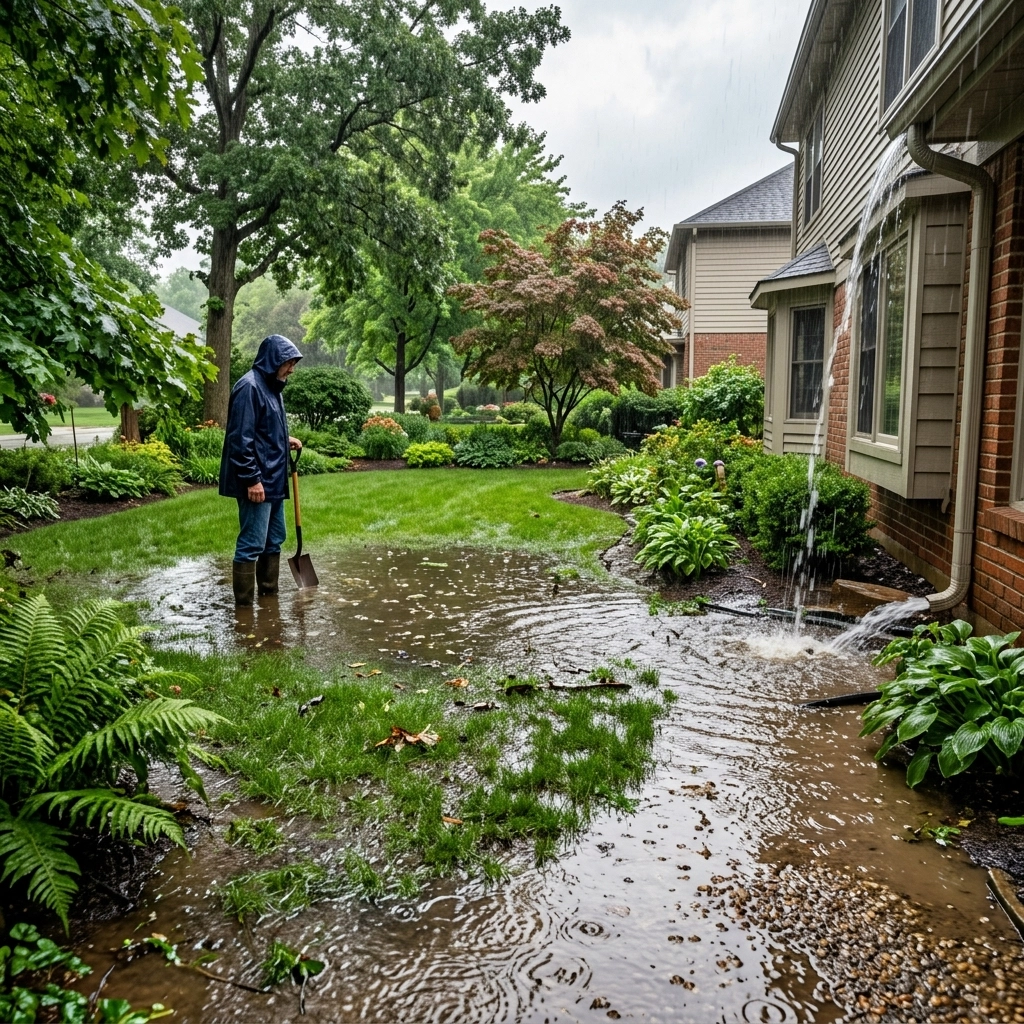
Maintaining a beautiful home in the Dunlap area comes with its fair share of challenges, and drainage is often at the top of the list. Between our heavy seasonal rains and the notorious local red clay, keeping your yard dry can feel like a full-time job. When water starts pooling near your foundation or turning your lawn into a swamp, it is more than just an eyesore. It is a threat to your property’s structural integrity.
At Whitzell Excavation, we see these issues every day from Jasper to Spencer and down into Dunlap. If you have noticed that your yard stays soggy long after the clouds have cleared, there is likely a mechanical or structural reason for the failure. Understanding why your current system is failing is the first step toward a permanent solution.
1. Poor Yard Grading and Surface Slope
The most fundamental reason for drainage failure is improper grading. If the ground around your home does not slope away from the foundation, gravity will naturally pull water toward your basement or crawlspace. Many older homes in Dayton and Altamont have experienced soil settling over decades, which can reverse the original slope of the yard.
When we perform a site assessment, we often find “negative grading” where the yard has become a bowl. This collects runoff from the entire neighborhood rather than shedding it toward the street or a designated drainage easement.
The Professional Fix
We use precision laser levels to determine the exact pitch of your land. Our team then regrades the area to ensure a minimum of a six-inch drop over the first ten feet away from your foundation. This redirected flow prevents water from sitting against your home.
Precise. Permanent. Property-Saving.
2. The Tennessee Clay Factor
Dunlap and the surrounding Sequatchie Valley are famous for heavy clay soil. Clay is comprised of very fine particles that pack together tightly, leaving almost no room for water to permeate. Unlike sandy soil, which allows water to soak through quickly, clay acts like a sponge that holds moisture or a brick that rejects it entirely.
When clay becomes saturated, it expands. This expansion creates hydrostatic pressure against foundation walls. Once the soil can no longer hold water, the excess simply sits on the surface, creating those stubborn puddles that ruin your grass.
The Professional Fix
Whitzell Excavation solves clay issues through soil amendment or by bypassing the clay layer entirely. We often install specialized drainage systems that move water through gravel-filled trenches, giving the runoff a path of least resistance that doesn’t rely on the soil’s natural permeability.
Technical. Proven. Reliable.

3. Impacted or Over-Compacted Soil
Compaction often occurs during construction or major landscaping projects. Heavy equipment moving across a yard in South Pittsburg or Pikeville can crush the air pockets in the soil. Even if your soil isn’t pure clay, high levels of compaction prevent water from soaking into the ground.
This is especially common in new developments where heavy machinery was used to clear lots. The result is a lawn that looks fine but behaves like concrete during a rainstorm.
The Professional Fix
Our team utilizes professional-grade excavation equipment to break up compacted layers. In severe cases, we may recommend a more robust drainage installation Dunlap TN residents can rely on, such as a dry well or a comprehensive French drain system to handle the runoff that the soil can no longer absorb.
Heavy-Duty. Effective. Grounded.
4. Faulty Downspout Installation
Your roof is a massive water collector. During a heavy Tennessee downpour, hundreds of gallons of water flow through your gutters. If your downspouts drop that water right at the base of your house, you are essentially flooding your own foundation.
Many standard downspout extensions are too short or become disconnected over time. If they aren’t integrated into an underground system, the water simply recirculates back toward your crawlspace or basement.
The Professional Fix
We recommend and install buried downspout extensions. By connecting your gutters to solid PVC piping that runs far away from the house, we ensure that roof runoff is never a factor in your yard’s drainage health. This is a critical component of any drainage installation Dunlap TN homeowners should consider.
Integrated. Seamless. Dry.
5. Use of Inferior Drainage Materials
Many DIY projects and low-cost contractors use thin, black corrugated plastic piping for yard drains. While cheap and easy to find, these pipes are prone to several failures. They are easily crushed by lawnmowers or shifting soil, they accumulate sediment in their ridges, and they are a favorite home for nesting rodents.
Once a corrugated pipe kinks or clogs, the entire drainage system is effectively dead. Because the interior is not smooth, water moves slowly, allowing debris to settle and create permanent blockages.
The Professional Fix
Whitzell Excavation strictly uses high-quality, rigid PVC for our drainage solutions. Smooth-wall pipe allows water to flow at maximum velocity and is much easier to clean if a blockage ever occurs. It withstands the pressure of the soil and the weight of vehicles, ensuring your investment lasts for decades.
Durable. High-Flow. Professional-Grade.

6. Lack of Proper Pipe Pitch
Water does not move uphill without a pump. One of the most common mistakes we find in failing systems in areas like Dunlap and Whitwell is a lack of “pitch” or slope in the underground pipes. If a pipe is installed flat or has “bellies” (low spots), water will sit in the pipe.
Standing water in a pipe leads to sediment buildup and becomes a breeding ground for mosquitoes. Eventually, the pipe fills with silt and stops functioning entirely.
The Professional Fix
We utilize transit levels and grade stakes to ensure a consistent downward slope for every foot of pipe we lay. We verify the “fall” of the system before backfilling any trenches, ensuring that once the water enters the pipe, it has the momentum to reach the exit point.
Calculated. Accurate. Flow-Focused.
7. Improperly Installed French Drains
A French drain is a classic solution, but it is often installed incorrectly. Common mistakes include using the wrong type of gravel, failing to use a filter fabric (geotextile), or using perforated pipe with the holes facing upward.
Without filter fabric, the surrounding soil will eventually wash into the gravel and the pipe, “blinding” the drain and making it useless. If the holes in the pipe face up, the water level has to rise significantly before it even enters the pipe.
The Professional Fix
We follow industry best practices for French drain installation. This includes using non-woven geotextile fabric to wrap the entire trench, using clean-washed stone, and placing the perforated pipe with the holes facing down. This allows the water to enter the pipe from the bottom as the water table rises, carrying it away immediately.
Scientific. Protective. Smart.

8. Poor Catch Basin Placement
Catch basins are designed to capture surface water in low spots. However, if they are placed even an inch too high, the water will simply pool around the basin instead of flowing into it. Conversely, if they are placed in the wrong location, they miss the primary flow of runoff during a storm.
In places like Walden or Monteagle, where the terrain can be rugged, placing these basins requires a deep understanding of how water moves across a specific landscape.
The Professional Fix
Whitzell Excavation analyzes the natural flow of water across your property during the planning phase. We install catch basins at the precise low points and ensure they are set slightly below grade to “invite” the water in. We also use properly sized basins to handle the volume of water expected during heavy Dunlap storms.
Strategic. Capturing. Efficient.
9. Drains That Don’t “Daylight” Properly
The “daylight” point is where your underground drainage pipe exits to the surface. If this exit point is blocked by debris, overgrown with grass, or terminates in an uphill area, the water has nowhere to go. We often find systems that simply end in the middle of a yard, creating a new swampy mess in a different location.
If the discharge point is not protected, animals may crawl inside and build nests, or the pipe may become buried under mulch and soil over time.
The Professional Fix
We ensure every system we install has a clear, functional daylight point. We often use “pop-up” emitters or headwalls with animal guards to protect the exit. We make sure the discharge point is in a location where the water can safely flow into a street gutter, a creek, or a designated natural area without bothering your neighbors.
Functional. Protected. Complete.
10. Root Intrusion and Landscaping Conflicts
Nature always looks for water. If you have large trees near your drainage lines, their roots will eventually find any small crack or joint in the pipe. Once inside, the roots grow rapidly, fed by the constant supply of moisture. This eventually creates a solid mass that blocks all water flow.
Additionally, new landscaping beds or retaining walls can inadvertently block existing drainage paths, turning a previously dry yard into a wet one.
The Professional Fix
We plan our drainage routes to avoid major root zones whenever possible. By using solvent-welded PVC joints rather than just “snapping” pipes together, we create a root-resistant barrier. If you are planning a new project involving a retaining wall, we provide professional retaining wall preparation to ensure the wall itself doesn’t become a dam for your yard.
Harmonious. Strong. Root-Proof.

Why Professional Help Matters for Your Property
DIY drainage fixes often provide temporary relief but rarely solve the underlying structural issues of the land. At Whitzell Excavation, we bring specialized equipment and years of local experience to every project. We understand the specific soil conditions in Bledsoe County, Grundy County, and Marion County.
Our services go beyond just digging a ditch. We provide a full range of site solutions including:
► Land Clearing: Removing debris that might be obstructing natural water flow.
► Foundation Digging: Ensuring new builds have the proper drainage infrastructure from day one.
► Dump Truck Hauling: Bringing in the right aggregates and soil to fix your yard’s composition.
► Septic Tank Installation: Managing wastewater systems that must work in harmony with your yard’s drainage.
Whether you are in Gruetli-Laager, South Pittsburg, or right in the heart of Dunlap, our team is committed to protecting your home. We serve a wide area including Tracy City, Lusk, Pailo, Hendon, Palmer, Lone Oak, and West End.
Partner with the Experts at Whitzell Excavation
Don’t let another rainy season damage your foundation or ruin your outdoor living space. A failing drainage system is a problem that only gets more expensive the longer you wait. From simple downspout diversions to complex site regrading, we have the tools and expertise to get the job done right.
We take pride in our “built to last” philosophy. When we install a drainage system, we intend for it to be the last one you ever need. Our commitment to using superior materials and precise engineering sets us apart as the trusted choice for excavation and drainage in the region.
If you are ready to fix your yard’s water problems for good, contact us today to discuss your project. We look forward to helping you reclaim your yard and protect your home’s foundation with a professional drainage installation Dunlap TN can depend on.

