
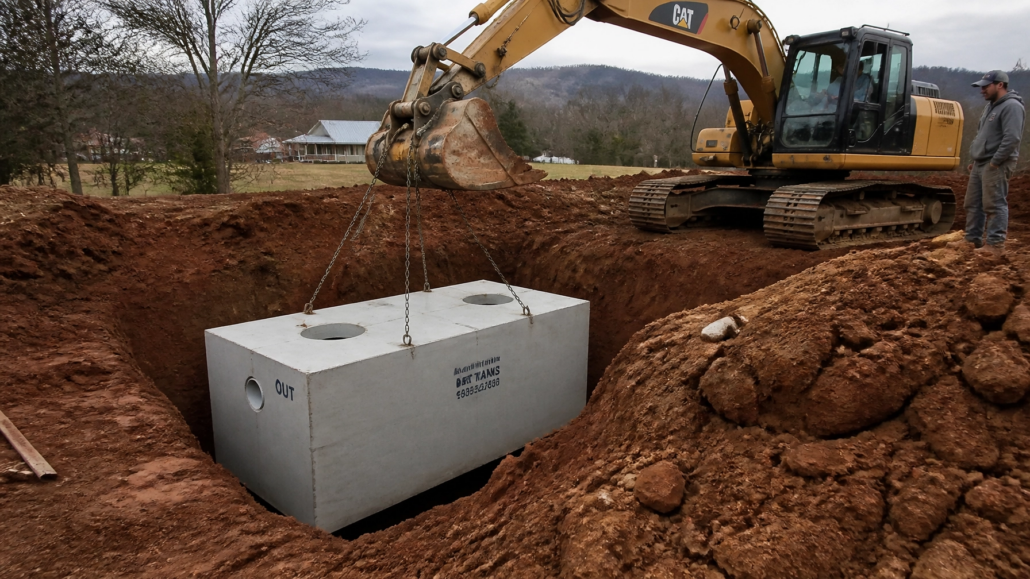
Do You Really Need a Septic Tank Inspection? The Truth About Tennessee’s New 2026 Rules
Navigating the complexities of property ownership in Tennessee has always required a keen eye for detail, but 2026 has introduced a new layer of technical demand. As the Tennessee Department of Environment and Conservation (TDEC) continues to refine its oversight of Subsurface Sewage Disposal Systems (SSDS), homeowners and developers across Sequatchie County and the surrounding valleys are facing a critical question: is a septic tank inspection truly mandatory, or is it a relic of over-caution?
The reality of the 2026 regulatory environment is that "good enough" no longer meets the legal or structural thresholds required for modern builds. Whether you are breaking ground in Dunlap or managing a commercial expansion in Jasper, the shift toward tighter environmental protection and more rigorous soil evaluation means your septic system is under more scrutiny than ever before. At Whitzell Excavation, we have tracked these changes closely, ensuring that our clients’ investments are protected by systems that are not just compliant, but engineered for decades of service.
Phase One: Navigating the 2026 TDEC Regulatory Landscape
Strict. Transparent. Compliant.
The foundation of Tennessee’s updated approach lies within TDEC Chapter 0400-48-01. This isn't just a manual of suggestions; it is the legal framework that dictates how every gallon of wastewater is managed on your property. In 2026, the emphasis has shifted from simple "perc tests" to comprehensive site evaluations that consider geological stability and groundwater protection.
Our team has observed a significant increase in the enforcement of multi-compartment tank requirements. The 2026 standards prioritize primary treatment within the tank, demanding structures that can effectively separate solids before effluent ever reaches your field lines.
► Soil Integrity Assessments: Before a single shovel of dirt is moved, your site must undergo a rigorous soil evaluation by a licensed professional. This ensures that the ground in Spencer or Altamont can actually handle the hydraulic load of your intended structure.
► Two-Compartment Mandates: Modern regulations favor tanks that utilize at least two compartments, where the first section handles two-thirds of the total capacity. This design is crucial for preventing "sludge breakout" into your secondary field.
► Setback Precision: New rules have sharpened the focus on distances from property lines, wells, and water bodies. Even a six-inch deviation can lead to a failed inspection and costly re-excavation.
► Permit-First Protocols: TDEC now explicitly requires a septic construction permit before any building pad construction or major dirt work begins. Skipping this step in Sequatchie County can result in immediate stop-work orders.
Understanding these rules is the first step toward securing your property's future. We prioritize site preparation that aligns perfectly with these evolving state requirements.

Phase Two: Why Inspections are No Longer Optional
Vital. Protective. Built to Last.
For many years, inspections were viewed as a formality for new builds. In 2026, the "truth" is that inspections serve as your primary defense against catastrophic system failure. The geology of the Sequatchie Valley: characterized by varying layers of clay and limestone: presents unique challenges for drainage. An uninspected system is a liability that can lead to environmental contamination and massive repair bills.
When we perform septic tank installation and field line work, we view the inspection as a milestone of success. It provides you with the documented proof that your investment is structurally sound and environmentally responsible.
► Environmental Stewardship: A failing septic system doesn't just stay on your property; it can leach into local groundwater. Inspections verify that your system is functioning as a mini-treatment plant, protecting the Tennessee landscape we all call home.
► Real Estate Security: If you plan to sell your property in Dunlap or Tracy City, a certified inspection report is often a non-negotiable requirement for buyers and lenders. A system without a paper trail is a major hurdle during closing.
► Preventative Maintenance: An inspection often catches minor issues: like a slightly misaligned distribution box or a cracked riser lid: before they escalate into a total field line failure.
► Compaction Verification: One of the most common causes of system failure is improper soil compaction around the tank and lines. Professional inspectors look for "settling" issues that could lead to pipe shear or tank shifting.
Ignoring the health of your septic system is a risk that modern property owners simply cannot afford. By adhering to Tennessee's latest soil and drainage rules, you ensure that your home remains a safe, functional sanctuary.

Phase Three: Engineering Your Field Lines for Longevity
Precise. Durable. High Performance.
The septic tank is only half of the equation; the "field lines" (or soil absorption area) are where the heavy lifting happens. In 2026, TDEC has increased its focus on "loading rates": a technical term for how much effluent the soil can actually absorb per square foot. In the rocky or clay-heavy soils of the Cumberland Plateau, this requires expert excavation and precision grading.
Our team at Whitzell Excavation doesn't just dig trenches; we engineer disposal fields. We understand that the longevity of your system depends on the interface between the gravel, the pipe, and the native soil.
► Custom Trench Design: We utilize top-tier equipment to ensure every trench is cut to the exact depth and width specified by your permit. Precision here prevents "localized overloading," where one part of the field becomes saturated and fails.
► Advanced Drainage Solutions: In areas with high water tables, we often integrate custom drainage solutions to divert surface runoff away from your absorption field. This prevents the "swamp effect" during heavy Tennessee rains.
► High-Quality Materials: From the grade of the gravel to the durability of the chambers or perforated pipe, we never compromise on the components that sit underground.
► Grading and Finishing: Once the lines are in place, the final grading is critical. We ensure the site is contoured to shed water naturally, protecting the integrity of the soil above your field lines.
When you see standing water or mud on a construction site, it is often a sign of poor planning or failed field lines. We eliminate these risks through calculated, professional execution.

Phase Four: The Whitzell Advantage in Site Preparation
Expert. Local. Reliable.
Choosing an excavation partner for your septic needs in 2026 requires more than just a man with a backhoe. It requires a licensed and insured professional who understands the local geography of Sequatchie, Marion, and Grundy Counties. We take pride in being a full-service partner, handling everything from land clearing and debris removal to the final setting of your septic tank.
Our collective expertise ensures that your project moves from "Phase One" to completion without the delays often caused by regulatory misunderstandings or equipment failure.
► Local Knowledge: We know the difference between digging in the valley and working on the mountain. This specialized knowledge prevents "surprises" that can derail a project budget.
► Modern Fleet: Our use of CAT and Yanmar equipment allows for precision work in tight residential spots and large-scale industrial sites alike.
► Transparent Communication: We keep you informed at every milestone. You will never have to guess about the status of your TDEC inspection or the progress of your installation.
► Structural Integrity: Our focus is always on the long-term success of your build. We don't just "fill the hole"; we ensure the ground is stable, the drainage is correct, and the system is built to last.
For homeowners in Dunlap and surrounding areas, knowing what to look for in an excavation service is the best way to ensure peace of mind during a complex build.

Securing Your Milestone with Professional Precision
The truth about Tennessee’s 2026 septic rules is that they are designed to protect you, your property, and our shared environment. While the requirements for inspections and two-compartment tanks may seem daunting, they are essential components of a modern, high-performing home.
At Whitzell Excavation, we provide the technical expertise and local reliability needed to navigate these regulations with confidence. Your success is our mission, and we are committed to delivering results that stand the test of time. Don't leave your property's structural integrity to chance: partner with a team that treats your investment with the seriousness it deserves.
Whether you are in the early stages of site preparation or need a professional team to manage your field line work, we are here to ensure your project is efficient, compliant, and built to last.

