
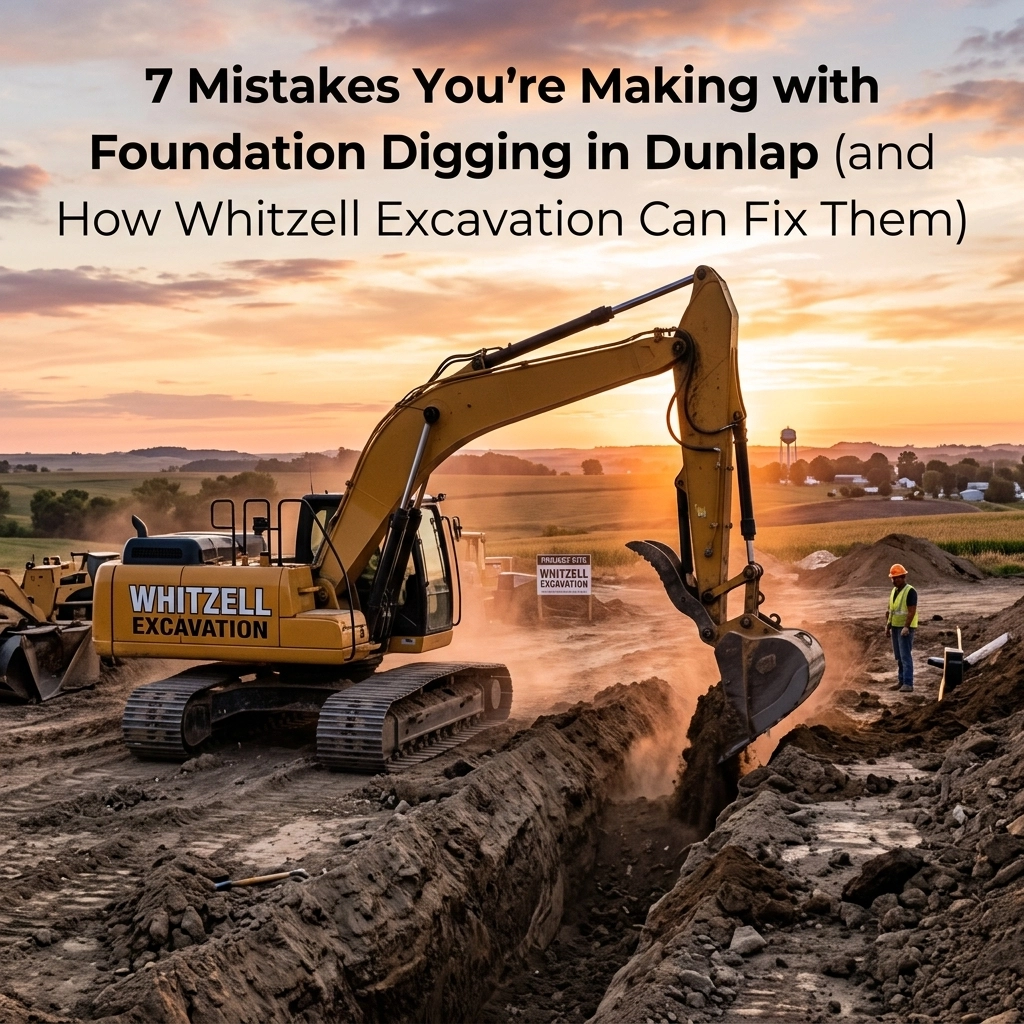
7 Mistakes You’re Making with Foundation Digging in Dunlap (and How Whitzell Excavation Can Fix Them)
Starting a new construction project in the Sequatchie Valley is an exciting milestone for any homeowner or contractor. Whether you are building a custom home in Dunlap or a commercial shop in Jasper, the excitement of seeing that first scoop of dirt move is unmatched.
However, that initial excitement can quickly turn into a headache if the foundation digging isn't handled with precision. A foundation is literally the base of your entire investment, and mistakes made during the excavation phase can haunt a structure for decades.
At Whitzell Excavation, we have seen it all across Marion County and Sequatchie County. From shifting soils to poor drainage, the challenges are real. We want your project to succeed, which is why we’ve identified the most common mistakes people make when digging foundations in our area.
Understanding the Stakes of Foundation Excavation
The Importance of Getting it Right the First Time
Building in areas like Pikeville or Whitwell requires a deep understanding of the local geography. The dirt under your feet isn't just "dirt"; it’s a complex mix of clay, rock, and organic material that reacts to weight and weather.
When foundation digging is rushed or done without professional oversight, the structural integrity of the building is at risk. We believe that proper foundation digging is the most critical step in the entire construction process.
Precision Groundwork. Stability Guaranteed. Built to Last.

Mistake 1: Excavating Without a Geotechnical Report
Flying Blind with Local Soil Conditions
One of the biggest errors we see property owners make in Dunlap and Bledsoe County is skipping the soil report. Many assume that because the neighbor's house went up fine, their soil is exactly the same.
In reality, soil can change drastically within just a few yards. Without a geotechnical report, you don’t know the bearing capacity of the earth or where the water table actually sits.
Data-Driven Digging. Risk Mitigation. Engineering Excellence.
► Hidden Soil Pockets: Soil reports identify expansive clays or loose sand that can cause a house to sink unevenly over time.
► Water Table Hazards: Knowing where groundwater sits prevents your foundation from being built in a perpetual swamp.
► Load Bearing Knowledge: We use these reports to determine exactly how deep and wide your footings need to be to support the weight of your structure.
Mistake 2: Inadequate Shoring and Sloping
Ignoring Safety and Structural Stability
Safety is the number one priority on any of our job sites. We’ve seen DIYers and inexperienced crews dig deep trenches in places like Spencer or Tracy City without proper shoring or sloping.
A trench deeper than five feet is a major hazard. If the walls aren't sloped back or supported by trench boxes, they can collapse in an instant, causing injury or damaging nearby utilities and structures.
Safety First. Compliant Standards. Site Security.
► Wall Collapse Prevention: Proper sloping ensures the weight of the surrounding earth doesn't push the trench walls inward.
► Utility Protection: Stable walls prevent soil from shifting and snapping existing underground lines.
► Code Compliance: Our team follows strict safety protocols to ensure your job site remains legal and safe for all workers.

Mistake 3: Poor Dewatering and Drainage Planning
Letting Your Foundation Turn into a Pond
The Tennessee weather can be unpredictable. If you don't have a plan for rainwater or groundwater in your excavation pit, you’re asking for trouble.
Digging and pouring footings in the mud is a recipe for disaster. Saturated soil loses its bearing capacity, and pouring concrete into standing water ruins the integrity of the mix. We specialize in drainage solutions to keep your site dry.
Dry Sites. Integrity Preserved. Advanced Water Management.
► Sump Pump Integration: We utilize high-capacity pumps to remove water before it softens the subgrade.
► Perimeter Drains: Installing temporary and permanent drainage prevents water from pooling against the foundation.
► Moisture Control: Managing the water table ensures that your concrete cures correctly and stays strong.
Mistake 4: Over-Excavation of the Site
Digging Too Much of a Good Thing
It sounds counterintuitive, but digging too deep is just as bad as not digging deep enough. When an operator goes past the planned depth, they have to backfill that area.
The problem is that backfilled soil: even if compacted: is never as stable as the undisturbed, "virgin" soil. This creates soft spots that can lead to differential settlement, where one part of your house sinks faster than the rest.
Exact Depths. Minimal Disturbance. Structural Uniformity.
► Laser Precision: We use advanced grade-checking technology to ensure we hit the exact depth required by your blueprints.
► Preserving Soil Integrity: By not over-digging, we keep the natural load-bearing capacity of your land intact.
► Cost Efficiency: Digging only what is necessary saves you money on both labor and the extra concrete or fill dirt needed to fix mistakes.

Mistake 5: Damage to Utilities and Adjacent Structures
Failing to Map the Underground
In established areas of Whitwell or South Pittsburg, there are often hidden utilities lurking just beneath the surface. Striking a gas line, water main, or fiber optic cable is a nightmare that halts production and leads to massive fines.
Furthermore, digging too close to a neighbor's retaining wall or foundation without proper support can cause their property to settle or collapse.
Careful Navigation. Utility Awareness. Respectful Boundaries.
► 811 Coordination: We always ensure that underground lines are marked before we ever put a bucket in the ground.
► Vibration Monitoring: In tight spaces, we monitor how our equipment affects nearby structures to prevent cracking.
► Lateral Support: Our team provides the necessary support to keep neighboring fences and walls standing tall.
Mistake 6: Improper Subgrade Preparation
Leaving Debris Under the Footings
The subgrade is the soil at the very bottom of the excavation where the footings will sit. A common mistake is leaving loose dirt, roots, or construction debris in this area.
Organic material like roots will eventually rot, leaving a void under your foundation. Loose dirt will compress under the weight of the concrete, causing the foundation to shift before the house is even finished.
Clean Subgrades. Compaction Mastery. Solid Bases.
► Debris Removal: We thoroughly clear the bottom of every excavation to ensure only solid earth remains.
► Mechanical Compaction: Our team uses specialized equipment to compact the subgrade to the required density.
► Inspection Readiness: We prepare the site so that it passes local building inspections in Sequatchie County the first time.

Mistake 7: Improper Stockpile Placement
Crowding the Hole with Spoils
Where you put the dirt you dig out matters just as much as where you dig. Piling massive "spoils" or stockpiles right at the edge of the excavation adds immense pressure to the trench walls.
This increases the risk of a cave-in and restricts access for other machinery and workers. We’ve seen many sites in Pikeville and Monteagle become unworkable because the dirt was piled in the wrong spot.
Organized Sites. Strategic Staging. Optimal Workflow.
► Safe Setbacks: We keep all stockpiles at least two to five feet back from the edge of the excavation.
► Hauling Services: If your site is tight, our dump truck hauling service can move the extra dirt off-site until it's needed for backfill.
► Erosion Control: We manage stockpiles to prevent silt from washing into local drains or onto neighbor's properties.
How Whitzell Excavation Fixes These Problems
Why We Are the Choice for Sequatchie and Marion Counties
We don’t just dig holes; we provide comprehensive site preparation. Our team understands the unique challenges of building in Walden, Lone Oak, and the surrounding regions.
From the initial land clearing to the final grade, we bring professional equipment and years of experience to every job. We work closely with homeowners and contractors to ensure every foundation is dug to the highest standards of safety and precision.
Local Experts. Professional Equipment. Reliable Results.
► Modern Fleet: We use the right sized excavators and dozers for every specific terrain, from flat valleys to steep hillsides.
► Expert Knowledge: We are familiar with the soil types in Pailo, Hendon, and Lees Station, allowing us to anticipate problems before they happen.
► Commitment to Quality: We treat every project like it’s our own home, ensuring the longevity and safety of your structure.

Final Thoughts on Foundation Success
Digging a foundation is about more than just moving dirt. It is about understanding geology, physics, and safety. By avoiding these seven common mistakes, you ensure that your building stands strong for a lifetime.
If you are planning a project in Dunlap, Pikeville, Jasper, or anywhere in the surrounding counties, don’t leave your foundation to chance. Contact the pros at Whitzell Excavation to get the job done right.
Whether you need septic prep, retaining wall work, or a full house site prepared, our team is ready to help. Check out our gallery to see the precision work we’ve done for your neighbors, or visit our blog for more tips on successful site preparation.
Whitzell Excavation: Your Foundation Starts Here.
We serve a wide area including Bledsoe County, Grundy County, Jasper, Spencer, Tracy City, Monteagle, Lusk, Pailo, Dunlap, Hendon, Palmer, Walden, Marion County, Gruetli-Laager, Lone Oak, West End, Whitwell, Pikeville, Sequatchie, Center Point, Cold Springs, Lees Station, Middle Valley, South Pittsburg, and Powells Crossroads. Reach out today to discuss your next project.

